Skip to content
Personalised assessment
collection complement all 0f23ea5a b182 4a4e bbe7 3f76205173ac

Breastfeeding food supplements

Discover our selection of breastfeeding products and food supplements to support your lactation and top up your nutrients, alongside a healthy diet. Our products come in a variety of formats, made predominantly from organic ingredients: snacks in the style of fenugreek food supplement, herbal tea, granola, moringa food supplement for great breastfeeding support!

Discover our selection of breastfeeding products and food supplements to support your lactation and top up your nutrients, alongside a healthy diet. Our products come in a variety of formats, made predominantly from organic ingredients: snacks in the style of fenugreek food supplement, herbal tea, granola, moringa food supplement for great breastfeeding support!

33 products

Filter products

Composition
Compatibility
Ideal for
Concerns
Format
View 33 results

Reset filters

Moringa Mama Moringa Mama
Best seller
Add

Moringa Mama

Moringa supplement for breastfeeding

Moringa at a dose of 350 mg

Shatavari to help maintain a good breast milk supply

Breastfeeding

from

£14.76

£17.36

Add
Post Essentials verre d'eau avec 2 gélules dans la main
Best seller
Add

Post Essentials

Post-partum multivitamin supplement

17 nutrients in their best forms

Covers post-birth nutritional needs and reduces fatigue

Breastfeeding
Post-partum

from

£24.36

£28.65

Add
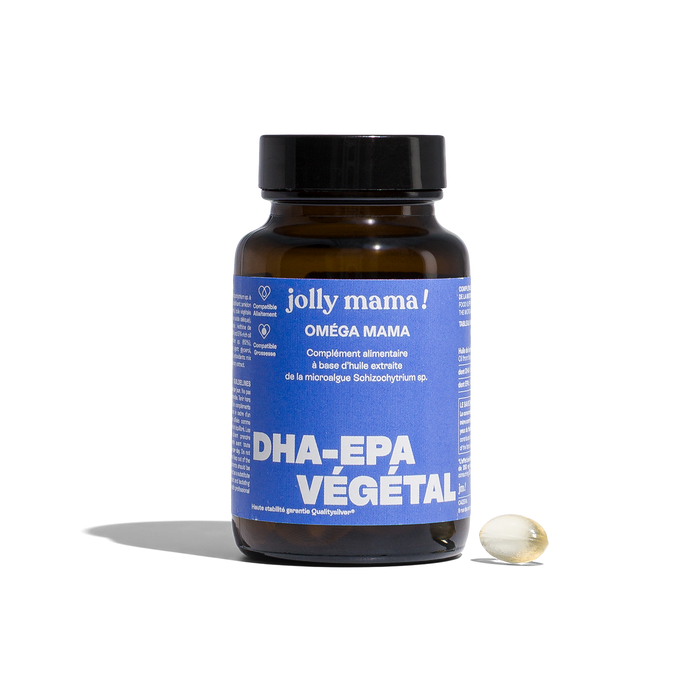
Omega Mama Omega Mama Jolly Mama – capsules DHA/EPA pures, parfaites pour post-partum
Best seller
Add

Omega Mama

Plant-based DHA and EPA supplement

250 mg of DHA per capsule

Exceptional stability: Totox index of 4, thanks to Qualitysilver® technology

For everyone

from

£16.98

£19.97

Add
Choline Mama pot complément choline avec 2 gélules et 1 verre d'eau
Best seller
Add

Choline Mama

Choline supplement for pregnancy

Patented choline bitartrate Vitacholine®

The best-absorbed form

Breastfeeding
Pregnancy

from

£16.24

£19.10

Add
Hair essentials Hair essentials
Best seller
Add

Hair essentials

Capsules for hair growth

Patented keratin Cynatine® HNS

Compatible with pregnancy and breastfeeding

For everyone

from

£25.84

£30.39

Add
Mama hair Complément Mama Hair, flacon brun 30 ml, soin post-partum anti-chute, compatible grossesse et allaitement
Add

Mama hair

Hair supplement course with biotin, keratin and apple

Patented keratin Cynatine® HNS and apple extract

Compatible with pregnancy and breastfeeding

Post-partum

from

£22.15

£26.05

Add
Cho-chocolat snack chocolat allaitement

Cho-chocolat

Chocolate snacks for breastfeeding

12 snacks of 45g with DHA

Supports lactation thanks to fenugreek

Breastfeeding

£21.41

£25.18

Banana choc Bananensnacks für die Stillzeit im Fokus

Banana choc

Chocolate banana snacks for breastfeeding

12 snacks of 45g

Supports lactation thanks to fenugreek

Breastfeeding

£21.41

£25.18

The subscription

  1. -15% on all your orders
  2. Free delivery from £60
  3. Routine adjustable at any time
  4. Surprises regularly tucked into your orders
  5. Exclusive guides and resources
Découvrir l'abonnement
Mama moonies (formerly Milk moonies) visuel snack moringa allaitement
Add

Mama moonies (formerly Milk moonies)

Moringa snack for breastfeeding mothers

5 bites of 15g

Contains moringa and is fenugreek-free

Breastfeeding

from

£7.38

£8.68

Add
Mama-gnésium gélules complément alimentaire magnésium
Best seller
Add

Mama-gnésium

Magnesium bisglycinate supplement

100% magnesium bisglycinate

The most bioavailable form

For everyone

from

£18.46

£21.71

Add
Sunny Mummy Sunny Mummy 10 mL – complément de vitamine D3 hautement assimilable + K2 pour prévenir carences fréquentes chez femmes enceintes et allaitantes
Add

Sunny Mummy

Vitamin D3 and K2 supplement for mothers

Active ingredients in their most bioavailable forms (D3 and K2 MK7)

3-month course

Pregnancy
Breastfeeding

from

£14.76

£17.36

Add
Sunny Baby Sunny Baby Jolly Mama – vitamine D3 bébé d’origine végétale, soutien immunité et développement osseux dès la naissance
Add

Sunny Baby

Vitamin D3 supplement for babies

Vitamin D3 optimal absorption

Dose recommended by the French Society of Paediatrics

For everyone

from

£8.86

£10.42

Add
Iron Mama femme enceinte tenant un verre d'eau et une gelule fer dans les mains
Best seller
Add

Iron Mama

Iron bisglycinate-rich supplement

Highly bioavailable iron bisglycinate

Ferrochel™ without the side effects of iron supplements

For everyone

from

£14.76

£17.36

Add
Purple power poudre protéine végétale myrtille
Add

Purple power

Blueberry-flavour plant protein powder

5g of protein per serving (30 servings)

Formula with no added sugars, no additives, sweeteners or preservatives

For everyone

from

£28.79

£33.86

Add
Choconut power Choconut power
Add

Choconut power

Chocolate plant-based protein powder

5g of protein per serving (30 servings)

Formula with no added sugars, no additives, sweeteners or preservatives

For everyone

from

£28.79

£33.86

Add
Mamaload Mamaload
Add

Mamaload

Marine collagen powder, cocoa flavour

Collagen peptides for optimal absorption

Vitamin C for collagen synthesis

Pregnancy
Post-partum

from

£20.67

£24.31

Add
Deca Mama tasse de café
Add

Deca Mama

Coffee-flavoured marine collagen powder

Collagen peptides for maximum absorption

Vitamin C for collagen synthesis

Pregnancy
Post-partum

from

£20.67

£24.31

Add
Collagène Mama verre avec un mélange de poudre collagène
Add

Collagène Mama

Neutral-flavour marine collagen powder

Collagen peptides for maximum absorption

Vitamin C for collagen synthesis

For everyone

from

£25.84

£30.39

Add
Peach Mama Peach Mama
New
Add

Peach Mama

Marine collagen powder — peach flavour

Hydrolysed marine collagen

Vitamin C for natural collagen synthesis

For everyone
Post-partum

from

£25.84

£30.39

Add
Mama Dreams Mama Dreams
Add

Mama Dreams

Sleep supplement based on glycine

Lemon balm, chamomile, glycine

Compatible with pregnancy and breastfeeding

For everyone

from

£23.62

£27.78

Add

Discover the products made for you

Faites votre diagnostic gratuit
Light Legs Light Legs
Add

Light Legs

Herbal supplement for light legs

20 ampoules of 10 ml (3 weeks)

Compatible with breastfeeding and pregnancy (from the 4th to the 8th month)

For everyone

from

£23.62

£27.78

Add
Banana glow visuel snack collagène grignoté en coin

Banana glow

Banana and chocolate collagen snacks

12 snacks of 45g

3g of collagen and 7g of protein per snack

For everyone

£21.41

£25.18

FR Breastfeeding Discovery

Breastfeeding Discovery

Discovery box - 8 breastfeeding snacks

Mix of 8 breastfeeding snacks of 45g

Supporting lactation and replenishing essential nutrients (DHA, iron and collagen)

Breastfeeding

£14.76

£17.36

Choco nut Choco nut
Add

Choco nut

Coconut chocolate granola for breastfeeding

300g of fibre-rich granola with vitamin C and magnesium

100% organic and natural

Breastfeeding

from

£11.07

£13.02

Add
Milk cookies utilisation cookie allaitement
Add

Milk cookies

Lactation cookie mix

5-minute preparation before cooking

Makes approximately 10 large cookies

Breastfeeding

from

£11.07

£13.02

Add
Milky Mama Infusion photo tisane allaitement dans une théière transparente
Add

Milky Mama Infusion

Organic caraway herbal tea for breastfeeding

Caraway to support lactation

Rich blend of 100% organic plants

Breastfeeding

from

£10.34

£12.16

Add
Zinc Mama Zinc Mama
New
Add

Zinc Mama

Zinc food supplement

1 capsule covers 100% of daily requirements

For fertility, skin, hair and immunity

For everyone

from

£14.76

£17.36

Add
SOS Breastfeeding

SOS Breastfeeding

A personalised consultation via video call or in person in Paris

A 1h30 consultation

For all your breastfeeding questions

Breastfeeding

£82.48
HAAKAA Milk Collector Recueil-lait Haakaa – ajuste à toutes les tailles de sein, mains libres, facile à transporter en sac de maternité

HAAKAA Milk Collector

Natural silicone milk collector

Collects breast milk that leaks from the breast

Relieves engorgement

Breastfeeding

£17.36
Breast pads coussinet d'allaitement jolly mama dans leur boute

Breast pads

Washable bamboo breast pads

Pack of 4 breastfeeding pads and a laundry net

OEKO-TEX® and GOTS certified

Breastfeeding

£14.76
Breast pad hot/cold compress breastfeeding

Breast pad

Hot-cold breastfeeding compress

Soothing and reusable

With its case

Breastfeeding

£10.42
Nipple Gauge

Nipple Gauge

Ruler for measuring your nipple

Ideal for choosing the right breast shield size

100% food-grade silicone

£5.21
Abricool Abricool
A victim of its own success

Abricool

Fenugreek breastfeeding snack

Naturally rich in fibre and magnesium

Vegan and 100% organic

Breastfeeding

£25.18

33 products of 33

FAQ on breastfeeding food supplements

When breastfeeding, it is important to pay attention to your nutritional intake to ensure you cover these additional needs (approximately 500 kcal per day) and to support your health and the healthy development of your baby. 

For some mothers, diet alone during breastfeeding is not sufficient to meet all their needs for vitamins, trace elements, and essential fatty acids — for themselves and their babies. Deficiencies may involve iron, calcium, omega-3s, and vitamin D. 


A post-partum food supplement suitable can then be beneficial for breastfeeding mothers: 

  • Post essentials, the supplement specifically designed for the post-partum period and breastfeeding. With its 17 vitamins and minerals, it helps to replenish nutrient levels. It also contains a patented active ingredient, Extramel®, which helps to reduce stress and support wellbeing. It can be taken alongside choline supplements to ensure high needs are met.
  • Complete multivitamin : Baby Bump, our pregnancy food supplement can be continued during breastfeeding to help cover your needs and those of your baby. It is an ultra-complete, premium formula containing 14 nutrients in bioactive form, choline (important for your baby's brain) and 200 mg of DHA (which contributes to brain and vision development). The vitamins and minerals it contains help to combat fatigue.
  • Iron supplement: Iron Mama, our iron supplement for pregnant women, can be taken post-partum and provides 100% of the recommended daily iron intake in just 1 capsule. With our iron bisglycinate Ferrochel™, our capsules combine optimal absorption with digestive comfort. For a more indulgent option, we have Boost squares, specially designed to combat fatigue. Croquantissime with hazelnuts and almonds is enriched with iron and covers 50% of daily needs.
  • Omega-3 : Omega-3s, in particular docosahexaenoic acid (DHA), are important for the development of the baby's brain and vision. The DHA content of breast milk depends solely on dietary intake and can vary tenfold depending on the diet. Breastfeeding mothers can take DHA supplements, such as our pregnancy omega-3 suitable for breastfeeding, to ensure their breast milk contains sufficient amounts. Baby Bump contains 200 mg of DHA, and to complement this you can turn to our Crazy nut spread, delicious and very rich in hazelnuts: a serving of 3 teaspoons also contains 200 mg of DHA.
  • Vitamin B12 supplement: For mothers following a vegan diet, there is a risk of deficiency in B12 and zinc. It is particularly important to maintain good B12 levels by supplementing. Nutritional support can be sought for optimal monitoring.
  • Magnesium: Our magnesium bisglycinate-based product, Mama-gnésium, helps to cover daily needs. A chocolate lover? Our magnesium-enriched bites, Broonies magnésium, will help you boost your energy levels! 

However, do consult a healthcare professional before taking any food supplement during breastfeeding. Not all products are necessarily suitable, for you or your baby. They may contain substances or dosages that are not recommended during breastfeeding. As such, do not reach for just any "VITALITY" or "ANTI-FATIGUE" product. Seek advice from your doctor or pharmacist. This also applies to products with a "BEAUTY" effect — opt instead for beauty care products that are specifically suited to this period!

Breastfeeding mothers have specific nutritional needs that are higher than usual. For example, the need for vitamins A, B6 and C, iodine and zinc increases by more than 50% for breastfeeding women! The concentration of certain nutrients can vary depending on the mother's intake, while others will remain stable at the expense of the mother's body reserves. Good nutrition is essential during this period, but diet alone is not always sufficient (processed foods, soil depletion, etc. all contribute to nutrient loss). Supplementation is worth considering to help limit the risk of deficiency, which can increase fatigue and stress in particular.

A drop in milk production is a very common issue for many mothers, encountered at daily during breastfeeding.

Galactagogues are foods or plants that contribute to increasing breast milk production. Before consuming galactagogues, it is essential to address the root of the problem and understand why your supply is low. Seek advice from a breastfeeding specialist, such as an IBCLC lactation consultant. No product containing galactagogues will compensate for insufficient feeds or a poor latch.


It is also common to have concerns about your supply when milk transitions to autocrine production. When your milk supply begins to regulate (between approximately 8 and 12 weeks after birth, adapting to your baby's needs), your breasts will feel less engorged and may seem softer. It is essential not to confuse this with a drop in supply, but rather to see it as your body successfully adapting to supply and demand.


With the support of a breastfeeding consultant, you can naturally stimulate your milk production — for example by feeding on demand or practising switch nursing. The right support can truly make all the difference! You can book an SOS breastfeeding consultation on the website with our IBCLC lactation consultant.


Some mothers turn to galactagogues during breastfeeding — these are compounds that may help boost milk production. Traditionally, fennel, fenugreek, caraway, and blessed thistle are thought to have an effect. We recommend consuming them in moderation, and avoiding food supplements containing them, as the doses are often high and concentrated. The benefits of moringa are proven in efficacy studies in breastfeeding mothers. In terms of diet, look to oats, flaxseeds, and brewer's yeast, which may help.  

The galactagogue foods can be consumed to help increase milk production in new breastfeeding mothers.


Before thinking about taking a galactagogue: 

- Make sure baby has a good latch (consult an IBCLC if needed)
- Relax and get comfortable
- Feed on demand without watching the clock
- Increase the frequency of feeds
- Encourage skin-to-skin contact


Some galactagogues, such as moringa or brewer's yeast, may help, but be careful not to consume too much. Always consult a healthcare professional before taking a breastfeeding supplement.

For mothers returning to work after maternity leave who would like to continue breastfeeding, expressing breast milk makes it possible to maintain lactation and extend breastfeeding over time.

Returning to work and continuing tobreastfeeding can be a challenge. Yet recent studies have shown that mothers who continued to breastfeed their child after returning to work took less time off to care for a sick child (almost three times less, thanks to the protective immune effects of breast milk).

The real secret to combining breastfeeding and work is knowing that it is possible. You don't have to weaning baby. Follow our BACK TO WORK challenge to make this transition as smooth as possible!

The benefits of breastfeeding of breastfeeding are numerous.


For your baby:

  • Breast milk is the only food specifically designed for your baby. It protects them and helps build their immune system.
  • It helps the baby develop a richer gut microbiome and may reduce the risk of illness (diarrhoea, allergies, etc.)
  • Breastfeeding may improve your baby's eating behaviour, reduce the risk of obesity, type 2 diabetes, asthma and eczema, malocclusions, sudden infant death, and constipation. It is available at any time, free of charge and at the right temperature. 

For you:

  • Breastfeeding and breast cancer: Breastfeeding reduces the risk of developing hormone-dependent breast cancer, ovarian cancer, and osteoporosis. It also affects your mood: it reduces the risk of severe depression. Breastfeeding also speeds up your recovery after birth and helps the uterus return to its pre-pregnancy size, and delays the return of periods.
  • Breastfeeding naturally uses up to 500 calories per day, which helps you lose weight naturally.
  • And finally, breastfeeding can save you money: the cost of infant formula, water, and the necessary equipment is estimated at around €600 for the first 6 months!


For both of you:
Breastfeeding can create a strong physical and emotional bond between you and your baby (even though a strong bond can of course develop through bottle feeding too), and can give you a great sense of achievement.

Here are our tips to prepare as well as possible for breastfeeding, and give yourself every chance of success if that is your wish!

  • Speak to your doctor about your intention to breastfeed and find out about breastfeeding support at the place where you plan to give birth, if you are not giving birth at home. Some hospitals and birth centres "baby-friendly" have taken particular steps to create the best possible environment to support breastfeeding.
  • Take a "class" on breastfeeding to give yourself (and your partner) the opportunity to prepare and ask questions before the baby arrives. Carole Hervé's videos are extremely well made. Check out our free ebooks on breastfeeding and our blog.
  • Find a lactation consultant before the birth. You can build a relationship with a lactation consultant before your baby arrives so that you have support in place after the birth.
  • Speak to your midwife, IBCLC consultant or gynaecologist. Discuss any breast surgery or injury you may have had. If you are experiencing depression or if you are taking food supplements or medication, speak to your doctor about treatments that may be compatible with breastfeeding — there are always options. The CRAT website is a great resource in this regard.
  • Tell the medical team that you wish to breastfeed as soon as possible after delivery. The sucking reflex is very strong during the first hour of a baby's life, and putting your baby to the breast within the first hour can really help get things off to a good start.
  • Talk to friends who have breastfed, or consider joining a breastfeeding support group.
  • Stock up on items you might need for breastfeeding, such as nursing bras, and snacks to keep on hand whenever you feel hungry!

Let's take stock ofdiet during breastfeeding. As Dr Jack Newman highlights, breastfeeding women do not have to be "saints".
- Claiming that if a breastfeeding mother's diet is not "perfect", her milk will be of poor quality is completely wrong.
- Allergy to breast milk does not exist; only a rare condition, galactosaemia, contraindicates breastfeeding in infants as they cannot digest a specific sugar.
- Breast milk is not responsible for reflux, regurgitation or colic.
- Breast milk does not prevent your baby from sleeping well, nor does it make them dependent on you to fall asleep.
- Babies fed with infant formula do not sleep through the night earlier.
- Moderate coffee consumption is permitted.
- Science does not validate the link between the consumption of certain foods (cabbage, for example) and baby's wind.
- Eating spicy food is permitted when breastfeeding.
- Condiments and other strongly flavoured foods such as garlic, for example, can be consumed when breastfeeding.

During the first month of life, if milk transfer is going well, a breastfed baby will:

- Wet between 6 and 8 nappies per day (urine is plentiful and clear).

- Have 3 stools in 24 hours, up to 8 per day, decreasing towards the end of the first month (from 6 per day to 1 per week).

- After the passing of meconium around day 5, stools are liquid and lumpy, and their colour can range from golden yellow to greenish brown. Stools are on average as large as the baby's palm.

- Birth weight is normally regained between 4 and 8 days of life (within 10 days at most).

There are several positions for breastfeeding. Some will be more suitable at night, or depending on your experience with breastfeeding. Don't hesitate to seek support from a lactation consultant. The most important thing is to get yourself comfortable first:
– Make sure you have everything within reach: water, a snack, and perhaps some music…
– Settle in a quiet spot.
– Take care to position yourself well and be properly supported with cushions (you should feel no tension whatsoever).
– Whatever position you choose to latch your baby, their head, neck, and spine should be well aligned, and their head should be level with your breast.
– Their ear should not touch your shoulder.

+200,000 mamas approve!

4.8
OUT OF 5
4.67
OUT OF 5
4.7
OUT OF 5
Image 79

Your personalised assessment in 3 minutes

We recommend the products best suited to your situation.

Enjoy 15% off your first order

Take my free assessment

Our breastfeeding products and food supplements to support your lactation

Our breastfeeding products and food supplements are designed to support you during this nutritionally demanding period. They contain vitamins (such as vitamin B9 or folic acid), minerals such as iodine, magnesium, choline, and DHA, an omega-3 fatty acid that contributes to the normal development of the brain and vision of the breastfed baby, and also helps combat mommy brain. The most important thing is to nourish yourself well and consume all the essential nutrients to avoid deficiencies, fatigue, and so on.

And of course, as the right support can make all the difference to your breastfeeding journey, do explore all our resources on the blog or book a consultation with one of our IBCLC consultants!

What are the drawbacks of breastfeeding?

There are no drawbacks to breastfeeding — it remains the best option for you and your baby. There are, however, many challenges during breastfeeding for which various solutions can be offered to support mothers. 

As Dr Jack Newman points out, women who breastfeed do not have to be "saints". Claiming that if a new mother's diet is not "perfect" her milk will be of poor quality is completely wrong.

Increased nipple sensitivity may be felt in the days following birth. But breastfeeding should not be painful! Cracked nipples are not inevitable. They are often caused by a poor breastfeeding position or a latching issue, and they can be treated.

What is the ideal duration for breastfeeding?

There is no right age to breastfeed or to stop breastfeeding. 

The benefits of breastfeeding are dose-dependent, meaning that the longer you breastfeed, the more visible the benefits are for both the baby and the mother.

The right duration is the one that suits both you and your baby, in a balance that is built day by day. 

The WHO recommends exclusive breastfeeding for up to 6 months, and continued breastfeeding for at least 2 years.

After 6 months, and up to 1 year, breast milk or infant formula should remain the basis of your baby's diet.

Your breast milk will always be nourishing and always suited to your baby, whatever their age!

When to feed at the breast? How often should you breastfeed?

You feed on demand; it is even often recommended to put the baby to the breast at the slightest sign of wakefulness, at least during the first few months.

At birth, it is perfectly normal for a baby to feed a good dozen times in 24 hours, or even much more.

Do not wait for them to cry before putting them to the breast; by then they are so unsettled that getting them to feed becomes more difficult. 

You can even take advantage of their drowsy state and their reflexive sucking to bring them to the breast in cases of difficulty (poor weight gain, pain).

Setting a schedule is one of the worst pieces of advice when it comes to breastfeeding. Trying to regulate your baby by spacing feeds 2–3 hours apart contradicts the universal principle of on-demand breastfeeding, which allows the baby to self-regulate over time.

How to stop breastfeeding and wean your baby?

If you wish to stop breastfeeding and wean your baby, we recommend gradually reducing the duration of feeds and maintaining close contact with your baby (babywearing, rocking, etc.) to make this transition easier.

Resuming breastfeeding is always possible! If you have started weaning your baby, you can stimulate your milk supply again by putting them to the breast as frequently as possible.

added to cart
Continue shopping