- Jolly Mama
- Our ingredients
-
Vitamin D
Vitamin D3: bones, immunity and winter support for your maternity
vitamin D3 contributes to the normal absorption and utilisation of calcium and phosphorus, two key minerals for the maintenance of normal bones and teeth in both mother and child.
it contributes to the normal functioning of the immune system — a welcome support in autumn, winter and during seasonal changes.
in mainland France, cutaneous synthesis is greatly reduced from October to March, which explains why vitamin D3 supplementation is recommended during pregnancy and beneficial during the colder months.
Origin and description
Vitamin D3, or cholecalciferol, is a fat-soluble vitamin that your body can either produce in the skin under the effect of UVB rays, or obtain through diet and supplementation.
C'est la seule vitamine majoritairement produite par exposition solaire, ce qui la distingue de toutes les autres. Une fois disponible, elle est transformée par le foie en 25(OH)D, sa forme de réserve, puis activée par les reins en 1,25(OH)2D, la forme hormonale qui agit dans tout l'organisme. Ce double passage rénal et hépatique en fait une vitamine fine à entretenir au fil des saisons. Pendant la grossesse, elle accompagne la construction du squelette du bébé et contribue au maintien d'une ossature normale chez la maman, ce qui justifie une attention particulière à sa forme et à la qualité de la matière première utilisée.
Sous forme naturelle, l'alimentation apporte une part assez modeste de la vitamine D3 dont vous avez besoin, car peu d'aliments en sont naturellement riches. Les principales sources sont les poissons gras comme le saumon, le hareng, le maquereau ou la sardine, ainsi que le jaune d'oeuf, le foie de morue et certaines huiles de foie de poisson. La vitamine D3 a la particularité d'être la seule vitamine majoritairement issue de l'exposition solaire : votre peau peut en fabriquer sous l'effet des rayons UVB, ce qui en fait un cas à part dans le monde des micronutriments. La limite en France métropolitaine vient de la latitude : entre octobre et mars, le rayonnement UVB devient insuffisant pour permettre une synthèse cutanée efficace, et l'alimentation seule peine alors à couvrir les besoins, surtout en grossesse, en allaitement et chez les femmes peu exposées au soleil le reste de l'année.
Sous forme de complément alimentaire, deux formes principales coexistent : la vitamine D3, ou cholécalciférol, et la vitamine D2, ou ergocalciférol. La D3 cholécalciférol est mieux assimilée et se stocke plus efficacement dans l'organisme que la D2, ce qui explique pourquoi elle est aujourd'hui privilégiée dans la plupart des formules de qualité. Traditionnellement, la D3 est extraite de la lanoline de mouton, mais elle peut aussi être obtenue à partir d'un lichen, ce qui ouvre une option d'origine entièrement végétale, particulièrement appréciée des femmes véganes ou végétariennes. Chez Jolly Mama, nous n’utilisons que la forme vitamine D3. Vous retrouvez nos compléments de vitamine D et nos compléments grossesse complets, dans lesquels la D3 est souvent associée à la vitamine K2 ménaquinone (MK7) pour orienter le calcium vers les os. Côté qualité, on regarde la forme exacte (cholécalciférol), le dosage par dose journalière, la traçabilité de la matière première et la synergie avec la K2.
Apports satisfaisants en vitamine D3 par stade de vie
Apports recommandés en vitamine D (µg/jour)
- Femme adulte (18+) : 15 µg/jour — 600 UI (EFSA 2016)
- Grossesse : 15 µg/jour — 600 UI (EFSA 2016)
- Allaitement : 15 µg/jour — 600 UI (EFSA 2016)
- Limite supérieure de sécurité : 100 µg/jour — 4 000 UI (EFSA)
D3 cholécalciférol
- Efficacité pour augmenter le 25(OH)D sérique : supérieure (Tripkovic 2012)
- Stockage tissulaire : supérieur
- Stabilité de la molécule : plus stable
- Origine : animale (lanoline) ou végétale (lichen)
D2 ergocalciférol
- Efficacité pour augmenter le 25(OH)D sérique : plus faible
- Stockage tissulaire : plus faible
- Stabilité de la molécule : moins stable
- Origine : végétale (levure)
Le saviez-vous : En France métropolitaine, le rayonnement UVB nécessaire à la synthèse cutanée de la vitamine D3 devient insuffisant d'octobre à mars. Pendant ces six mois, votre peau ne peut quasiment plus fabriquer de vitamine D, quelle que soit votre exposition au soleil. Vos seules sources possibles deviennent alors l'alimentation, riche en D3 surtout via les poissons gras et le jaune d'oeuf, et la supplémentation, ce qui explique pourquoi la D3 est devenue un réflexe d'hiver pour beaucoup de femmes.
Products containing it
-
Sunny Baby
Vitamin D3 supplement for babies
Vitamin D3 optimal absorption
Dose recommended by the French Society of Paediatrics
For everyonefrom
£7.99£10.43
AddPurchase options
-
Sunny Mummy
Vitamin D3 and K2 supplement for mothers
Active ingredients in their most bioavailable forms (D3 and K2 MK7)
3-month course
PregnancyBreastfeedingfrom
£13.31£17.38
AddPurchase options
-
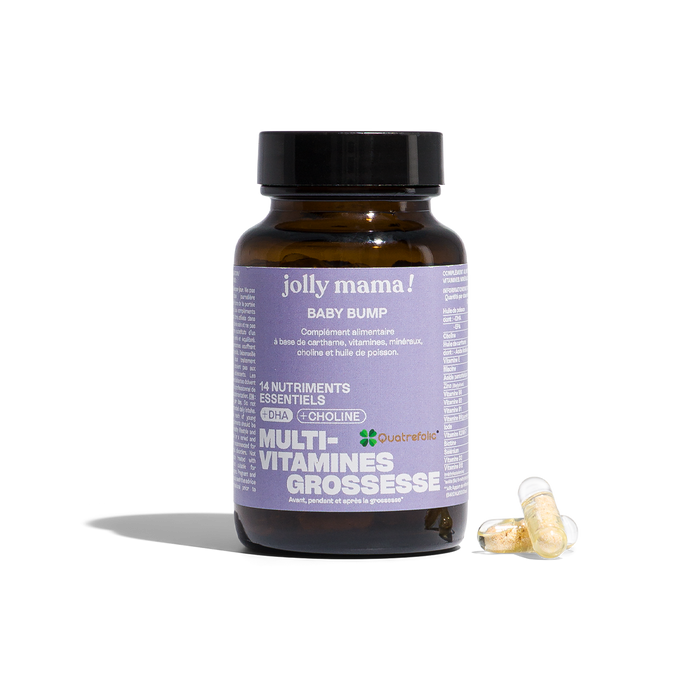
Baby Bump
Multivitamines DHA grossesse & fertilité
14 nutriments essentiels + DHA + Choline
Formule 3-en-1 ultra complète avec capsule duocaps ™
Baby ProjectPregnancyfrom
£32.29£39.98
AddPurchase options
-
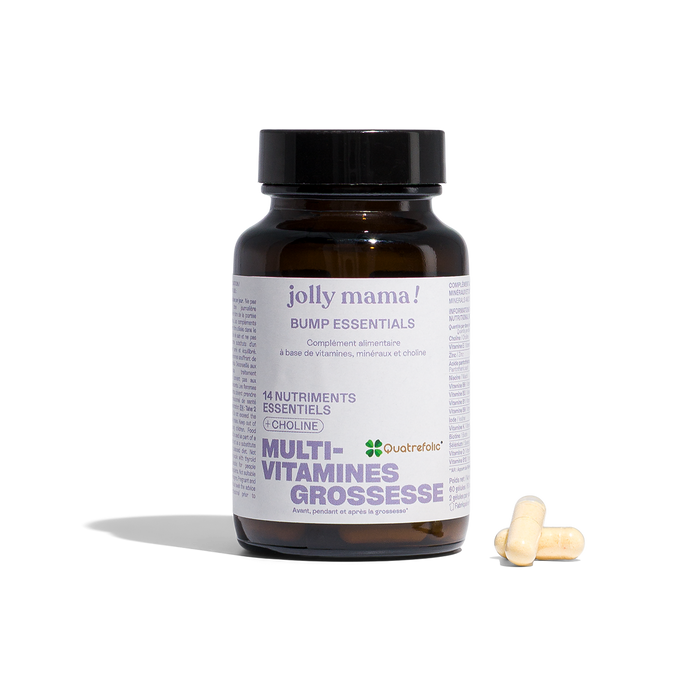
Bump essentials
Multivitamines vegan grossesse & fertilité
15 nutriments clés, dont choline et folates hautement biodisponibles
100 % vegan et sans DHA
Baby ProjectPregnancyfrom
£18.92£27.81
AddPurchase options
-
Bump powder
Multivitamin powder for conception & pregnancy
15 nutriments clés, dont choline et folates hautement biodisponibles
100 % vegan et en poudre, idéale en cas de nausées
Baby ProjectPregnancyfrom
£20.69£30.42
AddPurchase options
-
Péri Essentials
Perimenopause vitamin supplement
Before, during and after the menopause
17 essential nutrients
(Peri)menopausefrom
£19.95£26.08
AddPurchase options
-
Mama essentials
Multivitamin supplement for women
15 highly bioavailable vitamins and minerals
100% vegan formula
For everyonefrom
£13.31£17.38
AddPurchase options
Why is vitamin D3 your maternity ally?
-
Bone health
Vitamin D3 contributes to the maintenance of normal bones and teeth, a useful foundation during pregnancy, breastfeeding and throughout a woman's life.
-
Calcium absorption
It contributes to the normal absorption and utilisation of calcium and phosphorus, two key minerals for supporting the mother's skeleton and that of the baby.
-
Immunity
It contributes to the normal functioning of the immune system, making it a particularly valued vitamin during autumn and winter.
-
Muscle function
It contributes to the maintenance of normal muscle function, a precious support when daily life calls for tone, mobility and endurance.
-
Pregnancy and winter support
It supports pregnant women and new mothers during the cold season, a period when cutaneous synthesis is significantly reduced in mainland France.
How does it work? (The science bit)
The journey of vitamin D3 through your body is at once cutaneous, digestive and hormonal. When your skin is exposed to UVB rays from the sun, it produces cholecalciferol from a cholesterol precursor. D3 from food or a supplement is absorbed in the small intestine along with dietary fats, making it a fat-soluble vitamin. In both cases, the cholecalciferol enters the bloodstream and reaches the liver, which converts it into 25(OH)D, its storage form. This form then travels to the kidneys, which activate it into 1,25(OH)2D, the hormonal form capable of acting on a very wide range of cells. When sun exposure becomes insufficient — as is the case in mainland France between October and March — dietary intake and supplementation take over to support this circuit.
In terms of its effects, activated vitamin D3 binds to a cellular receptor called VDR, present in most tissues of the body. It acts notably on the intestinal absorption of calcium and phosphorus, on bone mineralisation, and on the regulation of certain immune cells. The synergy with vitamin K2 menaquinone (MK7) makes particular sense in this context: D3 promotes calcium absorption, and K2 activates the proteins — osteocalcin and MGP — that direct this calcium towards bones and teeth rather than soft tissues. It is this duo logic that inspires our Sunny Mummy formula, particularly useful during pregnancy, in the post-partum period and during the cold season.
Mama tip: To optimise the effect of vitamin D3 on your skeleton, consider the D3+K2 duo. D3 promotes calcium absorption in the intestine, and vitamin K2 menaquinone (MK7) activates the proteins that direct this calcium towards bones and teeth, rather than soft tissues. It is this logic that inspires our Sunny Mummy formula, which combines 25 µg of D3 with 50 µg of K2 per serving, particularly useful during pregnancy, in the post-partum period and during the cold season.
EFSA NDA Panel - Dietary reference values for vitamin D (2016)
CNGOF - Recommandations pour la pratique clinique, suivi de la grossesse
Your questions, our answers.
In mainland France, UVB radiation becomes insufficient from October to March to allow effective cutaneous synthesis of vitamin D3. During these months, your skin can no longer produce this vitamin in sufficient quantities, and diet alone rarely meets requirements. A regular intake via a well-dosed supplement helps to support your vitamin D status throughout the cold season.
Yes, vitamin D3 is particularly beneficial during pregnancy. The CNGOF recommends vitamin D supplementation for all pregnant women, generally as a single dose at 7 months or as ongoing supplementation. The adequate intake set by EFSA is 15 µg per day (600 IU), the same as outside of pregnancy, and D3 cholecalciferol is the best-absorbed form.
At the dosages used in a well-designed food supplement formula, vitamin D3 is generally well tolerated. The EFSA has set an upper safety limit (UL) of 100 µg per day, equivalent to 4,000 IU, for adults, including during pregnancy. Adequate intakes sit well below this threshold (15 µg per day), and the margin between requirements and the UL allows for comfortable regular supplementation.
A few sensible guidelines: follow the dosage indicated on the label, avoid combining several supplements containing D3 without advice, and take into account any supplementation prescribed during your antenatal care. If you have a kidney condition, are taking calcium, are on long-term medication, or have any doubts, seek advice from a healthcare professional who can assess your individual situation.
D3 cholecalciferol is better absorbed than D2 ergocalciferol and is stored more effectively in the body, making it the reference form for supplementation. The combination with vitamin K2 menaquinone (MK7) adds an interesting dimension: K2 activates the proteins that direct calcium towards bones and teeth, working in synergy with D3. This is the rationale behind our Sunny Mummy formula, designed for maternity and the colder months.
Our other ingredients
View all our ingredients
Vitamin K2 MK7 (K2VITAL®)