


What type of diet should you follow?
Why this product?

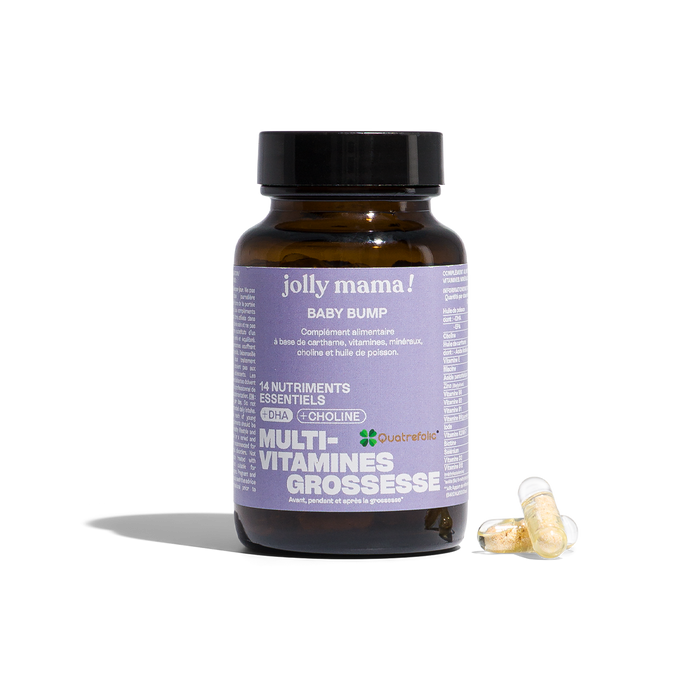
Baby Bump
Multivitamin DHA pregnancy & fertility
46€
14 essential nutrients + DHA + Choline
Replaces folic acid (methylated and patented vitamin B9 Quatrefolic®).
Contains choline, an essential nutrient
Contributes to the nutritional needs of pregnancy
What are the key nutrients during pregnancy?
If I eat well, do I still need a prenatal supplement?
What should my prenatal supplement contain?
In conclusion

Baby Bump
Multivitamin DHA pregnancy & fertility
46€
14 essential nutrients + DHA + Choline
Replaces folic acid (methylated and patented vitamin B9 Quatrefolic®).
Contains choline, an essential nutrient
Contributes to the nutritional needs of pregnancy


Mama Poule
Organic chicken bone broth
6 chicken bone broths or "bone broth" 100% organic
6g of collagen per pot
from
44€
Purchase options


Vanifique
Vanilla macadamia snacks for pregnancy and conception
400 μg of vitamin B9 (recommended dose)
Naturally occurring form, highly bioavailable to the body
29€


Iron Mama
Iron bisglycinate-rich supplement
Highly bioavailable iron bisglycinate
Ferrochel™ without the side effects of iron supplements
from
20€
Purchase options


Crazy nut
Vegan spread rich in DHA
+50% hazelnuts and palm oil-free
200 mg of DHA per serving
from
15€
Purchase options


Sunny Mummy
Vitamin D3 and K2 supplement for mothers
Active ingredients in their most bioavailable forms (D3 and K2 MK7)
3-month course
from
20€
Purchase options


Purple power
Blueberry-flavour plant protein powder
5g of protein per serving (30 servings)
Formula with no added sugars, no additives, sweeteners or preservatives
from
39€
Purchase options

Baby Bump
Multivitamin DHA pregnancy & fertility
14 essential nutrients + DHA + Choline
Ultra-complete 3-in-1 formula with duocaps™ capsule
from
46€
Purchase options
Mama Poule
Organic chicken bone broth
6 chicken bone broths or "bone broth" 100% organic
6g of collagen per pot
from
44€
Purchase options
Baby Bump
Multivitamin DHA pregnancy & fertility
from
46€

Mama Poule
Organic chicken bone broth
from
44€

Vanifique
Vanilla macadamia snacks for pregnancy and conception
29€

Iron Mama
Iron bisglycinate-rich supplement
from
20€

Crazy nut
Vegan spread rich in DHA
from
15€

Sunny Mummy
Vitamin D3 and K2 supplement for mothers
from
20€

Purple power
Blueberry-flavour plant protein powder
from
39€


