


-
01What is folic acid?
-
02What are the roles of vitamin B9?
-
03What are the sources of vitamin B9?
-
04Should you take folic acid or folate during pregnancy?
-
05Jolly Mama products contain only vitamin B9 in its active form!
-
06Beyond folic acid/folate: the importance of the methylation cycle for our health
-
07So what should you do when you have a baby project or are pregnant?
What is folic acid?
Why this product?

Folates Mama
Methylated vitamin B9 supplement for pregnancy
13€
400 µg of methylated vitamin B9
Alternative to folic acid
Ideal when trying for a baby and during pregnancy
Vegan and gluten-free
What are the roles of vitamin B9?
What are the sources of vitamin B9?
Should you take folic acid or folate during pregnancy?

Jolly Mama products contain only vitamin B9 in its active form!
Beyond folic acid/folate: the importance of the methylation cycle for our health
So what should you do when you have a baby project or are pregnant?

Folates Mama
Methylated vitamin B9 supplement for pregnancy
13€
400 µg of methylated vitamin B9
Alternative to folic acid
Ideal when trying for a baby and during pregnancy
Vegan and gluten-free


Vanifique
Vanilla macadamia snacks for pregnancy and conception
400 μg of vitamin B9 (recommended dose)
Naturally occurring form, highly bioavailable to the body
29€
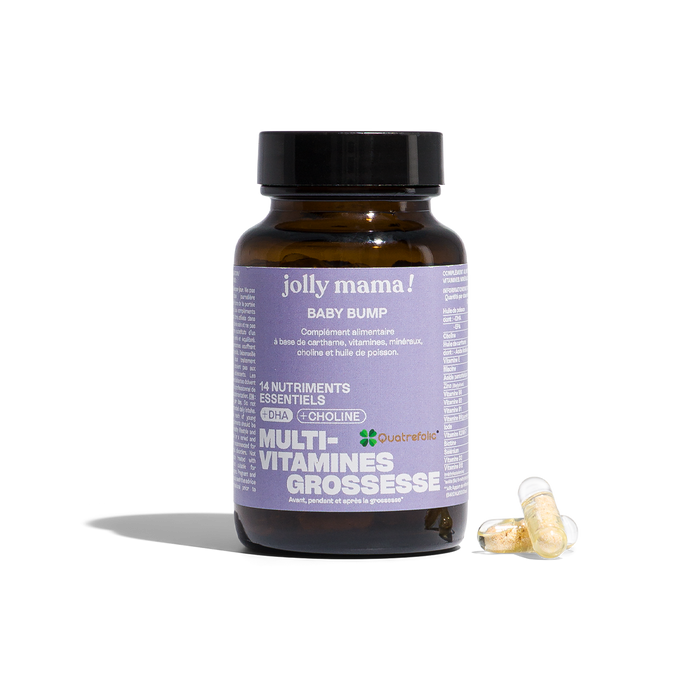

Baby Bump
Multivitamin DHA pregnancy & fertility
14 essential nutrients + DHA + Choline
Ultra-complete 3-in-1 formula with duocaps™ capsule
from
46€
Purchase options
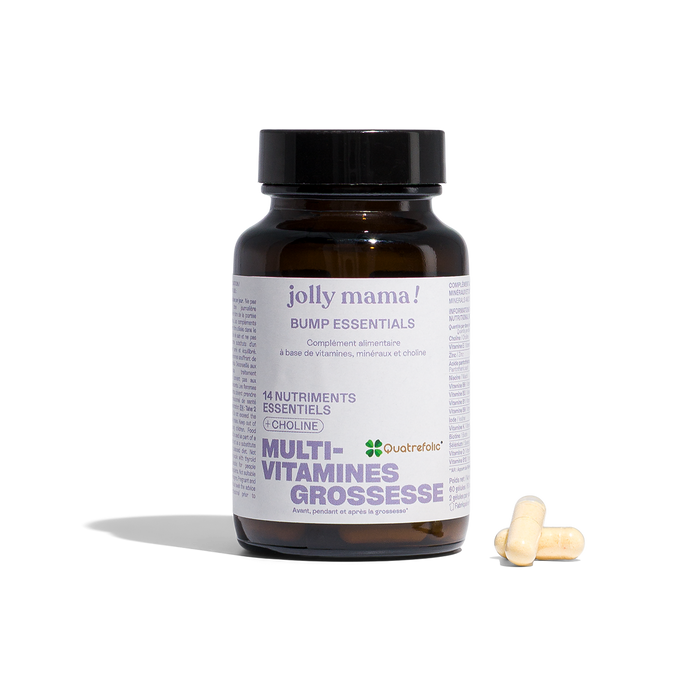

Bump essentials
Vegan pregnancy & fertility multivitamins
15 key nutrients, including choline and highly bioavailable methylated folate (5-mthf)
100% vegan and DHA-free
from
32€
Purchase options


Folates Mama
Methylated vitamin B9 supplement for pregnancy
Vitamin B9 Quatrefolic®
400 µg per daily dose
from
13€
Purchase options
Vanifique
Vanilla macadamia snacks for pregnancy and conception
400 μg of vitamin B9 (recommended dose)
Naturally occurring form, highly bioavailable to the body
29€
Folates Mama
Methylated vitamin B9 supplement for pregnancy
from
13€

Vanifique
Vanilla macadamia snacks for pregnancy and conception
29€

Baby Bump
Multivitamin DHA pregnancy & fertility
from
46€

Bump essentials
Vegan pregnancy & fertility multivitamins
from
32€


