Skip to content
Personalised assessment
Hormone anti-müllérienne faible : un indicateur de notre fertilité ?

Low anti-Müllerian hormone: an indicator of our fertility?

AMH and fertility: what is the relationship between this hormone and your fertility? We've taken a closer look!

Contents

Low anti-Müllerian hormone and fertility: what is the true relationship between this hormone and your fertility? We've looked into it!

AMH, or anti-Müllerian hormone, is a hormone produced by cells in the ovarian follicles. AMH concentration reflects ovarian reserve and may help estimate fertility.

Did you know?

AMH peaks in women between the ages of 16 and 25, then gradually declines until menopause. This decrease reflects the progressive loss of the primordial follicle pool and the decline in fertility.

How does female fertility work?

We are born with all of our follicles. They appear in the ovary at the fourth month of pregnancy.

It is estimated that at birth our follicular reserve contains between 530,000 and 950,000 so-called "primordial" follicles. Some sources cite up to 2 million.

With ageing, the reserve diminishes to contain only approximately 200,000 follicles at the age of 20, and fewer than 20,000 at 40. The main mechanism is involution through apoptosis (self-destruction) of the small follicles.

Throughout our lives, from our first menstrual cycle, our body prepares a small group of follicles (each containing a small immature egg cell). These are the primordial follicles that, under the influence of hormones, will grow and mature.

The menstrual cycle is a precisely orchestrated hormonal dance that enables, amongst other things, the conception of a baby.

Under the influence of GnRH produced by the hypothalamus, the pituitary gland secretes and releases two hormones into the bloodstream for the ovaries: FSH (follicle-stimulating hormone) stimulates the follicles; LH (luteinising hormone) triggers ovulation. 

At the start of each new cycle, a limited number of primordial follicles is selected from the pool of small growing follicles under the influence of FSH. From this cohort of growing follicles, one "dominant" follicle is chosen and ovulates under the influence of LH.

As the follicles grow, they produce oestrogens, which slows down the production of gonadotrophin-releasing hormone (GnRH) by the hypothalamus, and the production of FSH by the pituitary gland. This in turn prevents the development of the other follicles. 

The oestrogen peak triggers the production of LH by the brain. LH triggers ovulation: the rupture of the dominant follicle and the release of the egg into the fallopian tube. 

The other immature follicles degenerate and are subsequently reabsorbed. This phenomenon is known as follicular atresia. Typically, around 20 follicles mature each month, but only one follicle is ovulated.

The probability of pregnancy decreases with age:

A fertile couple aged 25 has a 25% probability of achieving a pregnancy in each menstrual cycle [1].

At 35, this probability drops to 12%, then falls to 6% at 40 [2].

As a result of the continuous decline in primordial follicles throughout reproductive life, the number of growing follicles also decreases. 

This is why age matters for fertility: the more cycles one has had, the fewer follicles remain "in reserve", and the more difficult it may be to stimulate and sustain a pregnancy.

From the age of 35, progesterone also declines significantly, which has an impact on fertility as well.

To find out more about the impact of age on fertility, see our article on the subject.

Why this product?

Cocooning+, ourfood supplement to conceive naturally: it contains red clover, which supports ovulation, and lady's mantle, which has an action similar to progesterone — vital for successful egg implantation. It also contains zinc, which supports fertility.

Our recommended product

Cocooning+

Cocooning+

Fertility supplement for women

30,60€

36€
Baby Project

Zinc contributes to normal fertility

With rhodiola, which helps the body adapt to emotional stress

Formulated with plant extracts (red clover, lady's mantle, rhodiola)

In support of an optimised diet and a good overall lifestyle.

Discover

What is the link between AMH hormone and fertility?

AMH, or anti-Müllerian hormone, is a hormone produced by cells within the follicles of the ovaries.

The role of AMH in women is to protect growing follicles from premature maturation, by opposing the effects of FSH. [3] In the absence of AMH, primordial follicles are recruited at a faster rate than normal.

The majority of studies report a peak in AMH in women between the ages of 16 and 25, followed by a progressive decline in concentration until the menopause [4]. This decrease reflects the gradual loss of the primordial follicle pool and the decline in fertility.

Take care mama

Beyond AMH, if we want to give ourselves every chance of conceiving, we can act on egg quality through nutrition, among other things. For example, lipids play a very important role in the composition and fluidity of egg cell membranes.

A few tips

To help limit the decline in AMH levels, it is advisable to: 
Stop taking combined oral contraceptives
Not smoking 
Good news: this decline appears to be reversible after stopping the pill and smoking.

AMH hormone testing

AMH hormone: a fertility indicator?

AMH hormone testing is used to assess the ovarian reserve of a woman, that is to say her available egg supply. This test is normally prescribed as part of an infertility assessment.

The higher the concentration of anti-Müllerian hormone, the greater a woman's chances of becoming pregnant.

A high AMH value generally indicates a significant number of follicles in the process of maturing and, consequently, a good ovarian reserve.

This test can therefore be used to estimate a woman's chances of ovulating naturally and to estimate how many eggs could be retrieved in the event of ovarian stimulation.

Depending on the results, this measurement may help inform the decision to bring forward a maternity project, freeze eggs, or consider egg donation.

It should be noted that AMH is not the only indicator of ovarian reserve. An ultrasound is generally also performed between the third and fifth day of the menstrual cycle to count the antral follicles in each ovary (follicles that have already developed); along with a measurement of follicle-stimulating hormone (FSH), which triggers follicle maturation, and oestradiol.

AMH hormone testing: how do the values vary?

Measuring anti-Müllerian hormone involves a simple blood test that does not require fasting. The result is then compared against values established as "standard" for one's age.

The concentrations of this hormone do not change during the menstrual cycle, which means the test can be carried out at any point in the cycle [5].

AMH concentrations may, however, vary according to ethnicity. [6]

Spanish researchers followed 10,443 women aged between 20 and 45. It was found that each average decrease of 0.2 ng/ml in AMH levels increased ovarian age by 1 year [7].

What are the limitations of AMH hormone testing?

AMH is often nicknamed the Anxiety Making Hormone (instead of Anti-Müllerian Hormone) because, whilst it is an indicator of ovarian reserve, it is not an indicator of the ability to conceive or of how one responds to IVF.

You may have a normal AMH level and still have difficulty becoming pregnant. The possible causes of infertility are numerous.

And women with PCOS often have a high AMH due to the many follicles developing, even though they are experiencing difficulties conceiving…

A large study of 181 women was unable to demonstrate a significant link between AMH levels and the chances of becoming pregnant [8]. So if your level is low, it does not mean you will never be able to conceive naturally!

And of course, it is important to remember that hormone levels are only a reflection of your inner physiology at a given moment. They do not define you!

Discover our products

How to improve your fertility

In a study of more than 2,000 women, researchers observed a decrease in AMH levels in women using combined oestrogen-progestogen contraception, in smokers, and during pregnancy [9]. 

Tobacco use has a known impact on ovarian reserve by accelerating follicular depletion [10]. 

Good news: this decrease appears to be reversible after stopping the pill, quitting smoking, and in the postpartum period!

Beyond AMH, if you want to give yourself every chance of conceiving, you can work on egg quality (through nutrition), on achieving quality ovulation, on robust progesterone production, and on any existing conditions that may be hindering fertility.

It takes approximately one hundred days for the dominant follicle to reach ovulation. Its health therefore depends on what has happened during this fairly long period.

Our Ovo+ supplement contains Coenzyme Q10 and NAC, which are beneficial for egg quality. 

For more details on how to get pregnant particularly through diet and lifestyle, you can read our article on the subject.

Preserving your fertility: the scientific guide to egg quality

An ebook comprehensive to understand the mechanisms that influence egg quality.
Discover the causes of egg quality decline and the science-backed levers (nutrition, supplements, lifestyle) to start acting on your fertility right now.

Low anti-Müllerian hormone: an indicator of our fertility?

Conclusion

If you would like an indication of your fertility, you can have your AMH hormone level tested.

Do not forget that this test is only an indicator of ovarian reserve, it is not an indicator of the ability to conceive or of how one responds to IVF.

It is possible to have a normal AMH level and still have difficulty conceiving, and a low level does not mean you will never conceive naturally!

Furthermore, sperm quality also counts and has a major impact! Having him carry out a male fertility test, such as a semen analysis, is also useful. 

Food supplements are not without consequence. They can interact with other supplements, foods or medications, and may not be suited to your personal situation — without even considering the need to choose them carefully and adjust dosages accordingly. It is therefore advisable to seek guidance from a healthcare practitioner specialising in nutrition (such as a naturopath or nutritional therapist).

Source 1, 2: "ART Fact Sheet – Assisted Reproductive Technology", Agence de Biomédecine

Source 3: "Antimüllerian Hormone Serum Levels: A Putative Marker for Ovarian Aging", 2002

Source 4: "Serum Anti-Müllerian Hormone Levels in Healthy Females: A Nomogram Ranging from Infancy to Adulthood", 2012

Source 5: "Predictive Factors of Ovarian Response and Clinical Outcome after IVF/ICSI", 2011

Source 6: "How Much Does AMH Really Vary in Normal Women?", 2013

Source 7: "Utilidad clínica de la hormona antimülleriana en la predicción de la edad ovárica en España", 2017

Source 8: "Ongoing Pregnancy Rates in Women with Low and Extremely Low AMH Levels", 2013

Source 9: "The Relationship between Anti-Müllerian Hormone and Age at Menopause in Subfertile Women", 2013

Source 10: "Effects of Cigarette Smoking on Reproduction", 2011

[1] https://www.agence-biomedecine.fr/IMG/pdf/fiche4-amp.pdf

[2] https://www.agence-biomedecine.fr/IMG/pdf/fiche4-amp.pdf

[3] Annemarie de Vet et al., « Antimüllerian Hormone Serum Levels: A Putative Marker for Ovarian Aging », Fertility and Sterility 77, no 2 (February 2002): 357‑62, https://doi.org/10.1016/s0015-0282(01)02993-4.

[4] S. Lie Fong et al., « Serum Anti-Müllerian Hormone Levels in Healthy Females: A Nomogram Ranging from Infancy to Adulthood », The Journal of Clinical Endocrinology and Metabolism 97, no 12 (December 2012): 4650‑55, https://doi.org/10.1210/jc.2012-1440.

[5] A. Nyboe Andersen et al., « Predictive Factors of Ovarian Response and Clinical Outcome after IVF/ICSI Following a RFSH/GnRH Antagonist Protocol with or without Oral Contraceptive Pre-Treatment », Human Reproduction (Oxford, England) 26, no 12 (December 2011): 3413‑23, https://doi.org/10.1093/humrep/der318.

[6] Antonio La Marca, Valentina Grisendi, et Georg Griesinger, « How Much Does AMH Really Vary in Normal Women? », International Journal of Endocrinology 2013 (2013): 959487, https://doi.org/10.1155/2013/959487.

[7] María Luisa López-Teijón Pérez et al., « Utilidad clínica de la hormona antimülleriana en la predicción de la edad ovárica en España », Prog. obstet. ginecol. (Ed. impr.), 2017, 341‑46.

[8] Alon Kedem et al., « Ongoing Pregnancy Rates in Women with Low and Extremely Low AMH Levels. A Multivariate Analysis of 769 Cycles », PLoS ONE 8, no 12 (2013): e81629.

[9] M. Dólleman et al., « The Relationship between Anti-Müllerian Hormone in Women Receiving Fertility Assessments and Age at Menopause in Subfertile Women: Evidence from Large Population Studies », The Journal of Clinical Endocrinology and Metabolism 98, no 5 (May 2013): 1946‑53, https://doi.org/10.1210/jc.2013-3105.

[10] C. Dechanet et al., « Effects of Cigarette Smoking on Reproduction », Human Reproduction Update 17, no 1 (February 2011): 76‑95, https://doi.org/10.1093/humupd/dmq033.

Our recommended product

Cocooning+

Cocooning+

Fertility supplement for women

30,60€

36€
Baby Project

Zinc contributes to normal fertility

With rhodiola, which helps the body adapt to emotional stress

Formulated with plant extracts (red clover, lady's mantle, rhodiola)

In support of an optimised diet and a good overall lifestyle.

Discover

Other recommended products

Cocooning+ Men Cocooning+ Men
-30%
Add

Cocooning+ Men

Complément fertilité pour homme

Inclus l'homme dans le projet bébé et agit sur la fertilité à 50/50 !

Les bons actifs (CoQ10, NAC, Carnitine)

Baby Project

from

33,24€

46€

Add
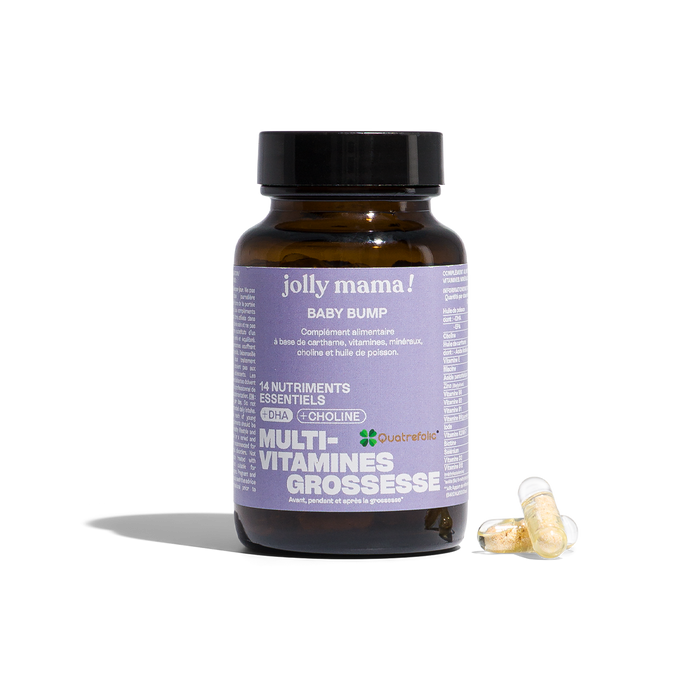
Baby Bump Gélules complément alimentaire
-15%
Best seller
Add

Baby Bump

Multivitamines DHA grossesse & fertilité

14 nutriments essentiels + DHA + Choline

Formule 3-en-1 ultra complète avec capsule duocaps ™

Baby Project
Pregnancy

from

37,15€

46€

Add
Pink Balance Pink Balance
-20%
Add

Pink Balance

Complément équilibre hormonal

À base de maca, shatavari et vitamines B

100% bio et naturelle

Baby Project
Happy Cycle

from

22,95€

30€

Add
Lemon Folates Jolly Mama – brown glass jar with lemon gummies rich in vitamin B9 Lemon Folates
A victim of its own success

Lemon Folates

Gummies grossesse avec vitamine B9 active

Alternative naturelle de l’acide folique

500µg de vitamine B9 issue d’un extrait de citron

Baby Project
Pregnancy

from

30€
Cocooning+ Cocooning+
-30%

Cocooning+

Fertility supplement for women

+98% naturally derived ingredients

Reducing stress that disrupts fertility

Baby Project

from

26,01€

36€

Add
Cocooning+ Men Cocooning+ Men
-30%

Cocooning+ Men

Complément fertilité pour homme

Inclus l'homme dans le projet bébé et agit sur la fertilité à 50/50 !

Les bons actifs (CoQ10, NAC, Carnitine)

Baby Project

from

33,24€

46€

Add
See the 5 recommended products

Recommended products

PAGE PRODUIT 15 fond 1
JD 202606 VIGNETTE ABO 15

JOLLY DAYS: Up to -50%

Bénéficiez de -15% supplémentaire sur votre premier mois en vous abonnant
Cocooning+
Promo -15%

Cocooning+

Fertility supplement for women

Baby Project

from

30,60€

36€

Cocooning+ Men
Promo -15%

Cocooning+ Men

Complément fertilité pour homme

Baby Project

from

39,10€

46€

Baby Bump
Best seller
Promo -5%

Baby Bump

Multivitamines DHA grossesse & fertilité

Baby Project
Pregnancy

from

43,70€

46€

Pink Balance
Promo -10%

Pink Balance

Complément équilibre hormonal

Baby Project
Happy Cycle

from

27€

30€

Lemon Folates Jolly Mama – brown glass jar with lemon gummies rich in vitamin B9
A victim of its own success

Lemon Folates

Gummies grossesse avec vitamine B9 active

Baby Project
Pregnancy

from

30€

Your questions, our answers.

Answer to the question.

Answer to the question.

Answer to the question.

added to cart
Continue shopping