


A passion for pasta
Why this product?

Baby Bump
Multivitamin DHA pregnancy & fertility
46€
14 essential nutrients + DHA + Choline
Replaces folic acid (methylated and patented vitamin B9 Quatrefolic®).
Contains choline, an essential nutrient
Contributes to the nutritional needs of pregnancy
A craving for strange foods
A metallic taste in the mouth
Swollen, painful and bleeding gums

Hearing problems

Baby Bump
Multivitamin DHA pregnancy & fertility
46€
14 essential nutrients + DHA + Choline
Replaces folic acid (methylated and patented vitamin B9 Quatrefolic®).
Contains choline, an essential nutrient
Contributes to the nutritional needs of pregnancy


Iron Mama
Iron bisglycinate-rich supplement
Highly bioavailable iron bisglycinate
Ferrochel™ without the side effects of iron supplements
from
20€
Purchase options


Broonies magnesium
Chocolate snack enriched with magnesium
5 bites of 15g
Highly absorbed magnesium glycerophosphate
from
10€
Purchase options


Croquantissime
Snacks enriched with iron bisglycinate
No side effects from iron supplements
50% of daily needs covered in one snack
29€
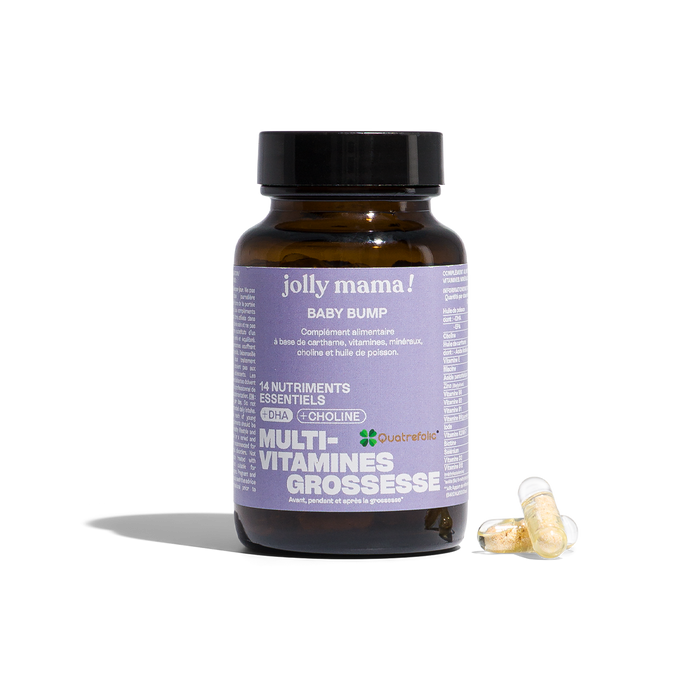

Baby Bump
Multivitamin DHA pregnancy & fertility
14 essential nutrients + DHA + Choline
Ultra-complete 3-in-1 formula with duocaps™ capsule
from
46€
Purchase options
Iron Mama
Iron bisglycinate-rich supplement
Highly bioavailable iron bisglycinate
Ferrochel™ without the side effects of iron supplements
from
20€
Purchase options
Baby Bump
Multivitamin DHA pregnancy & fertility
from
46€

Iron Mama
Iron bisglycinate-rich supplement
from
20€

Broonies magnesium
Chocolate snack enriched with magnesium
from
10€

Croquantissime
Snacks enriched with iron bisglycinate
29€


