- Jolly Mama
- Our ingredients
-
Vitamin E
Vitamin E: tocopherol, natural antioxidant and ally throughout your maternity journey
Vitamin E helps protect cells against oxidative stress — a valuable natural shield when your body is under greater demand.
During pregnancy, vitamin E plays a role in protecting the cell membranes of both baby and mother, contributing to a quality cellular environment.
Vitamin E may contribute to fertility and the maintenance of skin quality, two aspects that accompany the journey through motherhood from preconception to the postpartum period.
Origin and description
Vitamin E refers to a group of fat-soluble compounds, the most active of which is alpha-tocopherol.
It is one of the body's main fat-soluble antioxidants, playing an essential role in protecting cell membranes against oxidative damage. The body does not synthesise it, making a regular dietary intake essential. During pregnancy, vitamin E contributes to cellular protection in a context of increased metabolism and potentially heightened oxidative stress. During preconception, it may contribute to supporting fertility. The natural form (d-alpha-tocopherol) is generally better retained by the body than the synthetic form.
Vitamin E in food
Vitamin E is found mainly in vegetable oils, particularly sunflower oil, wheat germ oil, olive oil, and rapeseed oil. Almonds, hazelnuts, sunflower seeds, avocados, spinach, and sweet potatoes are also good sources. The absorption of vitamin E requires the presence of fats in a meal, as it is a fat-soluble vitamin. High-temperature cooking and oil refining can reduce its content. People following a very low-fat diet or consuming mainly refined oils may have insufficient intakes. Pregnancy nausea and food aversions can also limit usual sources.
Vitamin E as a supplement
As a food supplement, vitamin E comes in the form of d-alpha-tocopherol (natural form), dl-alpha-tocopherol (synthetic form), or mixed tocopherols. The natural form, identified by the prefix "d-", is better retained and utilised by the body. It is found in prenatal multivitamins such as pregnancy food supplements Jolly Mama. A quality supplement favours the natural form and a dosage suited to pregnancy. It is important not to exceed the recommended intake, as vitamin E accumulates in fatty tissues. Vegetable-based formulas are common and plant-derived vitamin E is suitable for vegan diets.
Products containing it
-
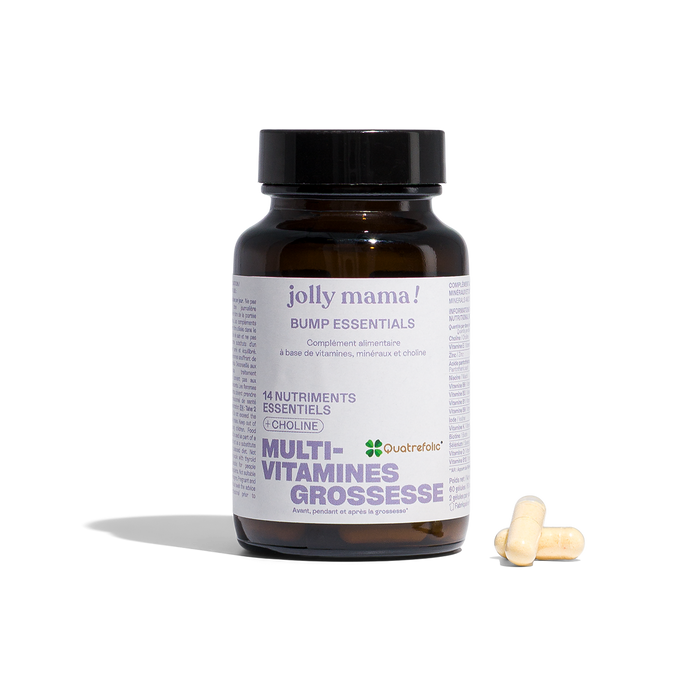
Bump essentials
Multivitamines vegan grossesse & fertilité
15 nutriments clés, dont choline et folates hautement biodisponibles
100 % vegan et sans DHA
Baby ProjectPregnancyfrom
21,76€32€
AddPurchase options
-
Bump powder
Multivitamin powder for conception & pregnancy
15 nutriments clés, dont choline et folates hautement biodisponibles
100 % vegan et en poudre, idéale en cas de nausées
Baby ProjectPregnancyfrom
23,80€35€
AddPurchase options
-
Post Essentials
Post-partum multivitamin supplement
17 nutrients in their best forms
Covers post-birth nutritional needs and reduces fatigue
BreastfeedingPost-partumfrom
26,65€33€
AddPurchase options
-
Mama essentials
Multivitamin supplement for women
15 highly bioavailable vitamins and minerals
100% vegan formula
For everyonefrom
15,30€20€
AddPurchase options
-
Péri Essentials
Perimenopause vitamin supplement
Before, during and after the menopause
17 essential nutrients
(Peri)menopausefrom
22,95€30€
AddPurchase options
Why is vitamin E your ally throughout motherhood?
-
Antioxidant protection
Vitamin E contributes to protecting cells against oxidative stress, for a preserved cellular environment every day.
-
Skin quality
It contributes to maintaining the integrity of the skin's cell membranes, for a complexion that stays healthy during and after pregnancy.
-
Fertility support
Vitamin E may contribute to the protection of reproductive cells, an important consideration for women on a conception journey.
-
Synergy with vitamin C
It works in complementarity with vitamin C, which regenerates it after its antioxidant action, amplifying cellular protection.
-
Vascular health
Vitamin E contributes to the protection of blood cell membranes, supporting circulation during pregnancy.
How does it work? (The science bit)
When you consume vitamin E, it is absorbed in the small intestine alongside dietary fats, then transported by lipoproteins through the blood to the cells. It integrates into cell membranes, where it acts as a shield against free radicals. These unstable molecules, produced by normal metabolism and amplified by stress, can damage the lipids in cell membranes. Vitamin E intercepts and neutralises these free radicals, thereby protecting the integrity of cells. Vitamin C then steps in to regenerate vitamin E, which explains the synergy between these two antioxidants.
During pregnancy, metabolism speeds up and the production of free radicals may increase. Vitamin E then helps to maintain a favourable oxidative balance for both mother and baby. It contributes to the protection of the cell membranes of the developing foetus and supports the integrity of the blood vessels. During preconception, its antioxidant role may contribute to the protection of reproductive cells. In the postpartum period, it continues to support skin quality and tissue recovery. Find vitamin E alongside other nutrients in our fertility supplements.
Your questions, our answers.
Vitamin E contributes to the protection of cells against oxidative stress, including skin cells. By protecting cell membranes, it may help maintain skin suppleness and quality. It is a foundational nutritional support, to be complemented by regular hydration and a diet rich in healthy fatty acids.
Vitamin E contributes to the protection of cells, including reproductive cells, against oxidative stress. Its role in fertility is being studied, and it is among the nutrients often included in protocols for preconception. An appropriate intake, as part of a balanced diet, can support a favourable cellular environment.
At the doses typically found in dietary supplements, vitamin E is well tolerated. As it is fat-soluble, it accumulates in the body, which is why it is important not to exceed the recommended intake. At very high doses, it could interact with blood clotting. Keep to the dosages in prenatal formulas to benefit from its effects safely.
Do not exceed the recommended intakes and avoid combining several supplements containing vitamin E. People on anticoagulant therapy should be particularly vigilant as vitamin E may influence blood clotting. Seek advice from a healthcare professional if you are taking medicines that affect clotting.
Natural vitamin E (d-alpha-tocopherol) is better retained by the body than the synthetic form (dl-alpha-tocopherol). The natural form is derived from vegetable oils, whilst the synthetic form is produced from petroleum derivatives. For a pregnancy supplement, opt for formulas using the natural form, which is more efficiently utilised by your body.
Our other ingredients
View all our ingredients
Omega-3 DHA
Vitamin D