Skip to content
Personalised assessment

Vitamin D3: bones, immunity and winter support for your maternity

actif vitamine d3 2ae10c7a b66a 48a2 99fe 8cfcccf07c69
Bone health and calcium

vitamin D3 contributes to the normal absorption and utilisation of calcium and phosphorus, two key minerals for the maintenance of normal bones and teeth in both mother and child.

Everyday immunity

it contributes to the normal functioning of the immune system — a welcome support in autumn, winter and during seasonal changes.

Pregnancy and winter support

in mainland France, cutaneous synthesis is greatly reduced from October to March, which explains why vitamin D3 supplementation is recommended during pregnancy and beneficial during the colder months.

Origin and description

Vitamin D3, or cholecalciferol, is a fat-soluble vitamin that your body can either produce in the skin under the effect of UVB rays, or obtain through diet and supplementation.

It is the only vitamin produced primarily through sun exposure, which sets it apart from all others. Once available, it is converted by the liver into 25(OH)D, its storage form, then activated by the kidneys into 1,25(OH)2D, the hormonal form that acts throughout the body. This dual hepatic and renal conversion makes it a vitamin that requires careful attention across the seasons. During pregnancy, it supports the development of the baby's skeleton and contributes to the maintenance of normal bone structure in the mother, which justifies particular attention to its form and the quality of the raw material used.

In its natural form, diet provides a fairly modest share of the vitamin D3 you need, as few foods are naturally rich in it. The main sources are oily fish such as salmon, herring, mackerel or sardines, as well as egg yolk, cod liver and certain fish liver oils. Vitamin D3 has the distinction of being the only vitamin produced primarily through sun exposure: your skin can produce it under the effect of UVB rays, which makes it unique among micronutrients. The limitation in mainland France comes from latitude: between October and March, UVB radiation becomes insufficient to allow effective skin synthesis, and diet alone then struggles to meet requirements, especially during pregnancy, breastfeeding, and for women with limited sun exposure for the rest of the year.

As a food supplement, two main forms coexist: vitamin D3, or cholecalciferol, and vitamin D2, or ergocalciferol. D3 cholecalciferol is better absorbed and stored more effectively in the body than D2, which is why it is now favoured in most quality formulations. Traditionally, D3 is extracted from sheep lanolin, but it can also be obtained from a lichen, which opens up an entirely plant-based option, particularly appreciated by vegan or vegetarian women. At Jolly Mama, we use only the vitamin D3 form. You can find our vitamin D supplements and our complete pregnancy supplements, in which D3 is often combined with vitamin K2 menaquinone (MK7) to direct calcium towards the bones. In terms of quality, the key things to look at are the exact form (cholecalciferol), the dosage per daily serving, the traceability of the raw material, and the synergy with K2.

Adequate vitamin D3 intakes by life stage

Recommended vitamin D intakes (µg/day)

  • Adult women (18+): 15 µg/day — 600 IU (EFSA 2016)
  • Pregnancy: 15 µg/day — 600 IU (EFSA 2016)
  • Breastfeeding: 15 µg/day — 600 IU (EFSA 2016)
  • Upper safety limit: 100 µg/day — 4,000 IU (EFSA)

D3 cholecalciferol

  • Efficacy in raising serum 25(OH)D: superior (Tripkovic 2012)
  • Tissue storage: superior
  • Molecular stability: more stable
  • Origin: animal (lanolin) or plant-based (lichen)

D2 ergocalciferol

  • Efficacy in raising serum 25(OH)D: lower
  • Tissue storage: lower
  • Molecular stability: less stable
  • Origin: plant-based (yeast)

Did you know: In mainland France, the UVB radiation needed for the skin to synthesise vitamin D3 becomes insufficient between October and March. During these six months, your skin can barely produce any vitamin D, regardless of your sun exposure. Your only possible sources then become food — rich in D3 mainly through oily fish and egg yolk — and supplementation, which is why D3 has become a winter habit for many women.

bebe et son complement alimentaire vitamine d

Products containing it

  • Sunny Baby Sunny Baby Jolly Mama – vitamine D3 bébé d’origine végétale, soutien immunité et développement osseux dès la naissance
    -15%
    Add

    Sunny Baby

    Vitamin D3 supplement for babies

    Vitamin D3 optimal absorption

    Dose recommended by the French Society of Paediatrics

    For everyone

    from

    9,18€

    12€

    Add
  • Sunny Mummy Sunny Mummy 10 mL – complément de vitamine D3 hautement assimilable + K2 pour prévenir carences fréquentes chez femmes enceintes et allaitantes
    -15%
    Add

    Sunny Mummy

    Vitamin D3 and K2 supplement for mothers

    Active ingredients in their most bioavailable forms (D3 and K2 MK7)

    3-month course

    Pregnancy
    Breastfeeding

    from

    15,30€

    20€

    Add
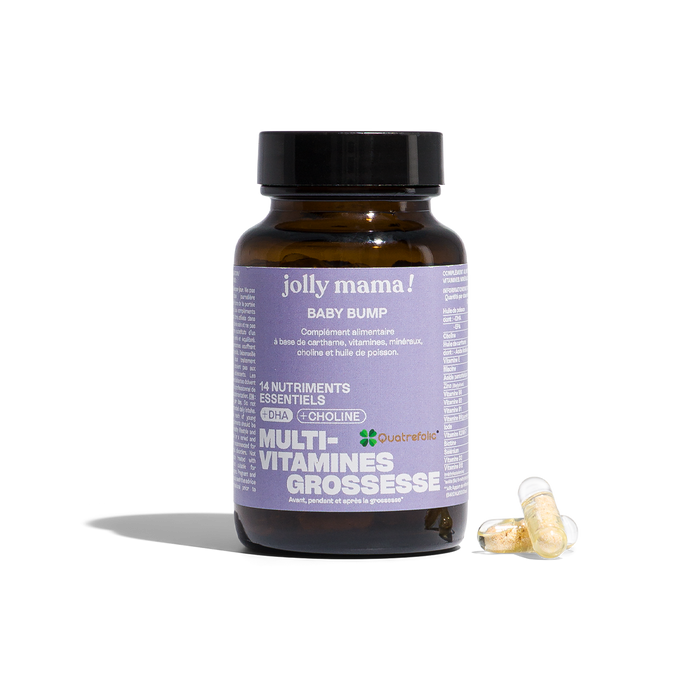
  • Baby Bump Gélules complément alimentaire
    -15%
    Best seller
    Add

    Baby Bump

    Multivitamines DHA grossesse & fertilité

    14 nutriments essentiels + DHA + Choline

    Formule 3-en-1 ultra complète avec capsule duocaps ™

    Baby Project
    Pregnancy

    from

    37,15€

    46€

    Add
  • Bump essentials femme enceinte prenant 2 gélules de Bump essentials, le complément grossesse
    -25%
    Add

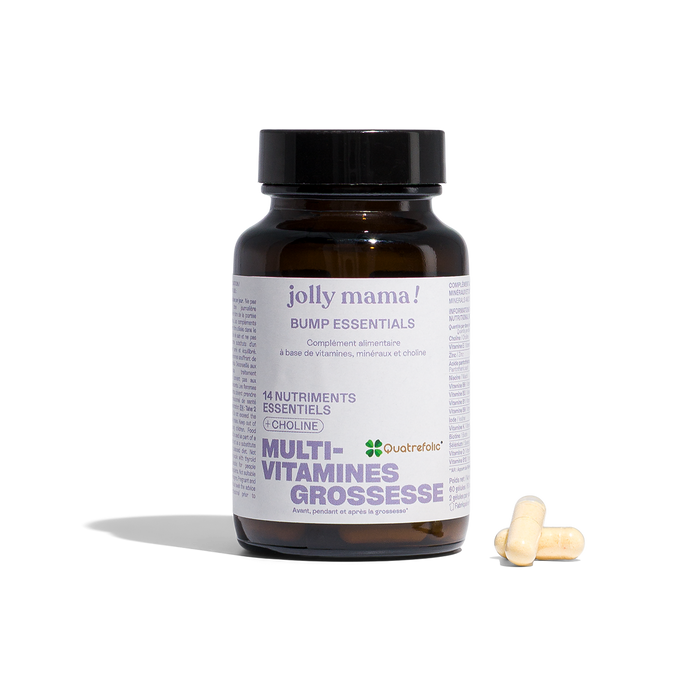
    Bump essentials

    Multivitamines vegan grossesse & fertilité

    15 nutriments clés, dont choline et folates hautement biodisponibles

    100 % vegan et sans DHA

    Baby Project
    Pregnancy

    from

    21,76€

    32€

    Add
  • Bump powder femme enceinte préparant Bump powder multivitamines grossesse en poudre
    -30%
    Iodine-free
    Add

    Bump powder

    Multivitamin powder for conception & pregnancy

    15 nutriments clés, dont choline et folates hautement biodisponibles

    100 % vegan et en poudre, idéale en cas de nausées

    Baby Project
    Pregnancy

    from

    23,80€

    35€

    Add
  • Péri Essentials photo of the perimenopause dietary supplement
    -20%
    New
    Iodine-free
    Add

    Péri Essentials

    Perimenopause vitamin supplement

    Before, during and after the menopause

    17 essential nutrients

    (Peri)menopause

    from

    22,95€

    30€

    Add
  • Mama essentials Mama essentials
    -20%
    New
    Iodine-free
    Add

    Mama essentials

    Multivitamin supplement for women

    15 highly bioavailable vitamins and minerals

    100% vegan formula

    For everyone

    from

    15,30€

    20€

    Add

Why is vitamin D3 your maternity ally?

  • Bone health

    Vitamin D3 contributes to the maintenance of normal bones and teeth, a useful foundation during pregnancy, breastfeeding and throughout a woman's life.

  • Calcium absorption

    It contributes to the normal absorption and utilisation of calcium and phosphorus, two key minerals for supporting the mother's skeleton and that of the baby.

  • Immunity

    It contributes to the normal functioning of the immune system, making it a particularly valued vitamin during autumn and winter.

  • Muscle function

    It contributes to the maintenance of normal muscle function, a precious support when daily life calls for tone, mobility and endurance.

  • Pregnancy and winter support

    It supports pregnant women and new mothers during the cold season, a period when cutaneous synthesis is significantly reduced in mainland France.

How does it work? (The science bit)

The journey of vitamin D3 through your body is at once cutaneous, digestive and hormonal. When your skin is exposed to UVB rays from the sun, it produces cholecalciferol from a cholesterol precursor. D3 from food or a supplement is absorbed in the small intestine along with dietary fats, making it a fat-soluble vitamin. In both cases, the cholecalciferol enters the bloodstream and reaches the liver, which converts it into 25(OH)D, its storage form. This form then travels to the kidneys, which activate it into 1,25(OH)2D, the hormonal form capable of acting on a very wide range of cells. When sun exposure becomes insufficient — as is the case in mainland France between October and March — dietary intake and supplementation take over to support this circuit.

In terms of its effects, activated vitamin D3 binds to a cellular receptor called VDR, present in most tissues of the body. It acts notably on the intestinal absorption of calcium and phosphorus, on bone mineralisation, and on the regulation of certain immune cells. The synergy with vitamin K2 menaquinone (MK7) makes particular sense in this context: D3 promotes calcium absorption, and K2 activates the proteins — osteocalcin and MGP — that direct this calcium towards bones and teeth rather than soft tissues. It is this duo logic that inspires our Sunny Mummy formula, particularly useful during pregnancy, in the post-partum period and during the cold season.

Mama tip: To optimise the effect of vitamin D3 on your skeleton, consider the D3+K2 duo. D3 promotes calcium absorption in the intestine, and vitamin K2 menaquinone (MK7) activates the proteins that direct this calcium towards bones and teeth, rather than soft tissues. It is this logic that inspires our Sunny Mummy formula, which combines 25 µg of D3 with 50 µg of K2 per serving, particularly useful during pregnancy, in the post-partum period and during the cold season.

Your questions, our answers.

In mainland France, UVB radiation becomes insufficient from October to March to allow effective cutaneous synthesis of vitamin D3. During these months, your skin can no longer produce this vitamin in sufficient quantities, and diet alone rarely meets requirements. A regular intake via a well-dosed supplement helps to support your vitamin D status throughout the cold season.

Yes, vitamin D3 is particularly beneficial during pregnancy. The CNGOF recommends vitamin D supplementation for all pregnant women, generally as a single dose at 7 months or as ongoing supplementation. The adequate intake set by EFSA is 15 µg per day (600 IU), the same as outside of pregnancy, and D3 cholecalciferol is the best-absorbed form.

At the dosages used in a well-designed food supplement formula, vitamin D3 is generally well tolerated. The EFSA has set an upper safety limit (UL) of 100 µg per day, equivalent to 4,000 IU, for adults, including during pregnancy. Adequate intakes sit well below this threshold (15 µg per day), and the margin between requirements and the UL allows for comfortable regular supplementation.

A few sensible guidelines: follow the dosage indicated on the label, avoid combining several supplements containing D3 without advice, and take into account any supplementation prescribed during your antenatal care. If you have a kidney condition, are taking calcium, are on long-term medication, or have any doubts, seek advice from a healthcare professional who can assess your individual situation.

D3 cholecalciferol is better absorbed than D2 ergocalciferol and is stored more effectively in the body, making it the reference form for supplementation. The combination with vitamin K2 menaquinone (MK7) adds an interesting dimension: K2 activates the proteins that direct calcium towards bones and teeth, working in synergy with D3. This is the rationale behind our Sunny Mummy formula, designed for maternity and the colder months.

added to cart
Continue shopping