Skip to content
Personalised assessment
Nos aliments contiennent de moins en moins de nutriments

Our foods contain fewer and fewer nutrients

Changes in farming practices and our food system have stripped our soils and our foods of the nutrients we need. If our soil is depleted, so are we. 

Contents

Food and eating habits have changed considerably in recent years.


Changes in farming practices and our food system have depleted our soils and stripped our food of the nutrients we need. If our land is exhausted, so are we. 

Crazy

By eating the same foods as our ancestors, we consume fewer nutrients.

The causes of nutrient depletion

Soil depletion

Total agricultural output has increased considerably in recent years. Productivity has risen markedly — in the United States, for example, it has tripled since 1948 [1]. Innovations in the use of chemical products, genetic modifications, equipment and so on have all contributed to this increase. 

This increase in productivity comes at a devastating cost to the nutrient content of our foods

Farming practices aimed at increasing productivity lead to soil degradation and a loss of organic matter. Carbon concentrations have fallen by 43%, nitrogen by 42%, phosphorus by 27% and sulphur by 33%. These nutrients support plant growth through photosynthesis, enzymes, protein synthesis and so on [2]. The loss of these nutrients from soil has an impact on the nutritional quality of the foods that grow in those soils. 

Studies suggest that conventional farming practices involving intensive soil tillage, nitrogen fertilisation and the application of synthetic pesticides may have contributed to the decline in nutrient density by disrupting the symbioses between crops and soil life [3].

Pollution

All plants have photosynthetic pathways that allow them to absorb carbon dioxide from the atmosphere, break it down and use the carbon for growth. When carbon dioxide concentrations are higher, crops absorb less water, meaning they also absorb fewer micronutrients from the soil. A 2018 study confirmed that concentrations of protein, iron, zinc and several B vitamins decreased in 18 types of rice following exposure to higher levels of carbon dioxide [4].

Processed foods

Processing (including preparation) makes food healthier, safer, more flavoursome and easier to preserve. Whilst the benefits are numerous, processing can also be detrimental, affecting the nutritional quality of food. 

Blanching, for example, is a heat treatment lasting a few minutes at 70°C to 100°C, designed to destroy enzymes that could damage vegetables or fruit before further processing (freezing, drying, etc.). This technique leads to losses of vitamins and minerals. 

Similarly, milling and extrusion can result in the physical removal of minerals during processing. 

The nutritional quality of minerals found in food depends on their quantity and bioavailability. It is known that the bioavailability of key minerals such as iron, zinc and calcium is strongly influenced by the fibre, phytic acid and tannin content of foods. The concentrations of these constituents are modified by various processing methods, including milling, fermentation, germination, extrusion and heat treatment. Vitamins, in particular ascorbic acid (vitamin C), thiamine (vitamin B1) and folic acid (vitamin B9), are highly sensitive to the same processing methods. The duration and temperature of processing, product composition and storage all considerably influence the vitamin status of our foods [5].

For example, coarse wheat flour mills lose less vitamin E than fine mills. The vitamin E content of germinated wheat can be up to 30% lower than that of ungerminated wheat [6].

The more a food is processed, the fewer nutrients it will contain in the end. 

Why this product?

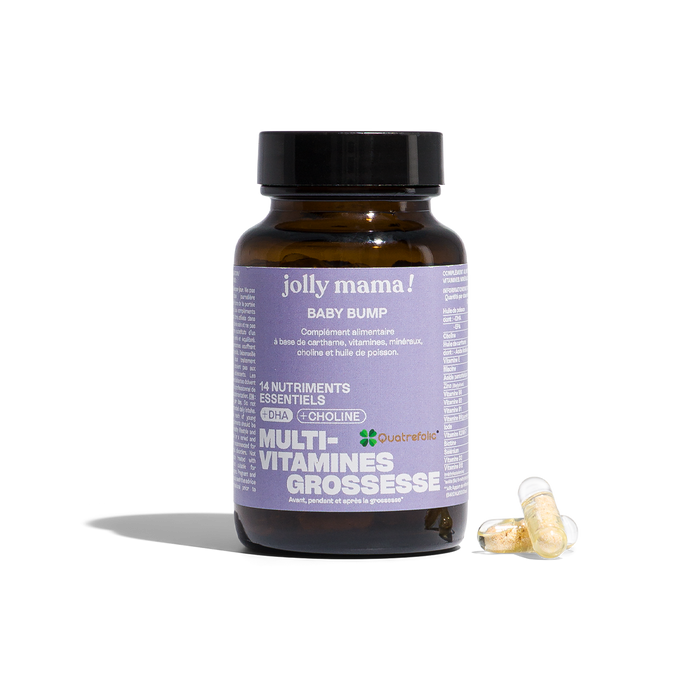
Baby Bump covers both the mother's nutritional needs and those of her baby, combining a pregnancy multivitamin complex (with 14 nutrients in bioactive form). It contains DHA, which contributes to the brain development and vision of the breastfed baby.

Our recommended product

Baby Bump

Baby Bump

Multivitamines DHA grossesse & fertilité

43,70€

46€
Baby Project
Pregnancy

14 essential nutrients + DHA + Choline

Replaces folic acid (methylated and patented vitamin B9 Quatrefolic®).

Contains choline, an essential nutrient

Contribue aux besoins de la grossesse

Discover

The loss of nutrients from food

The findings of a recent 2024 study are based on 15 years of data. They show that adults are not consuming enough vitamins A, C, D, E and K, choline, magnesium, calcium or potassium. Meanwhile, they are consuming too much sodium! [17].
What is more, this study shows that even consuming dietary supplements may not be sufficient. This is particularly true for magnesium, potassium and calcium, which are required in very high quantities and can hardly be covered by a single capsule [17].

One of the most significant scientific studies to have drawn attention to this issue was published in the United States in 2004. Based on nutritional data published in 1950 and 1999, university researchers noted changes in 13 nutrients across 43 different garden crops, from asparagus to beans and from strawberries to watermelons [7].

These raw fruit and vegetables showed a significant decline in their protein, calcium, phosphorus, iron, riboflavin (vitamin B2) and vitamin C content. The declines range from 6% for protein to 38% for riboflavin [8].

A more recent study from 2021 found that certain vegetables showed notable declines in nutrient content. Sweetcorn, red-skinned potatoes, cauliflower, green beans, green peas and chickpeas saw their iron content fall by 30 to 50% [9].  

There is a wealth of evidence demonstrating this decline in the nutritional quality of foods. Grains have also experienced falls. The protein content of wheat dropped by 23% between 1955 and 2016, and there have also been notable reductions in manganese, iron, zinc and magnesium content [10].

If we take the specific example of magnesium, part of the problem stems from the soil used in agriculture, which is becoming increasingly depleted in essential minerals. Over the past 60 years, the magnesium content of fruit and vegetables has fallen by 20 to 30%. It is also estimated that 80 to 90% of magnesium is lost during food processing [11]. 

In particular, for potassium, one study showed that although average potassium concentrations in milk remained the same between 1999 and 2015, concentrations in beef, pork, turkey and most fruit and vegetables (including bananas, but not potatoes) were generally lower in 2015 than in 1999, and that the reported reductions in dietary potassium intake corresponded to these decreases in the food supply [17].

In other words, you could eat exactly the same foods as your parents or grandparents - the same foods in the same quantities - and obtain fewer nutrients.

Did you know?

Organic foods are richer in nutrients than non-organic ones. 

Are organic foods affected?

Yes, organically sourced foods are also affected, but to a lesser extent. 

One study showed, for example, that organic crops contain significantly more vitamin C, iron, magnesium and phosphorus, and significantly fewer nitrates than conventional crops. Trends suggest that organic crops contain more nutritionally important minerals and fewer heavy metals than conventional crops. 

For example, when comparing organic and conventional lettuce, we find: 17% more for vitamin C, +17% iron and +29% magnesium [12]. For spinach, 52% more vitamin C is observed, and up to 69% more magnesium for organic carrots! 

This is thought to be due to better soil management and improved fertilisation practices for organic crops. 

Discover our products

The benefits of supplementation

According to forecasts, this depletion of nutrients is unlikely to resolve any time soon, and is instead tending to worsen. Using models based on projected atmospheric carbon dioxide concentrations by 2050, researchers estimate that the protein content of potatoes, rice, wheat and barley is likely to decrease by a further 6 to 14% [13]. 

It therefore seems difficult nowadays, even with a varied and balanced diet, to meet all your nutritional needs. In particular, during pregnancy and breastfeeding, when needs are significantly higher, it becomes truly challenging to provide all nutrients in sufficient quantities to support both your own needs and those of your baby. Supplementation with pregnancy vitamins and breastfeeding vitamins may become necessary. 

ANSES studies already show that, even with an optimised diet and an increase in calorie intake, it is not possible to cover 100% of the needs for certain essential nutrients [14].

A recent comprehensive review of nutrition in adolescent girls and women of reproductive age concluded that dietary deficiencies, particularly in iron, vitamin A, iodine and zinc, remain common [15]. 

The typical diet in developed countries, characterised by high consumption of red meat, refined grains, refined sugars and high-fat dairy products, also shows deficiencies in several important nutrients, particularly magnesium, iodine, and vitamin D [16].

One study even shows that vitamin D supplementation has been beneficial for the population. Positive changes in habitual dietary intake of vitamin D from foods, drinks and, in particular, food supplements, led to an improvement in the percentage of male and female adults meeting vitamin D recommendations [17].

We hope that in the future, it will no longer be necessary to supplement a natural diet. But in the meantime, we offer you supplements that will help you meet your nutritional needs during these particularly sensitive periods. 

Baby Bump, the pregnancy food supplement 3 in 1. It helps cover both the expectant mother's needs and those of her baby, combining a pregnancy multivitamin complex (with 14 nutrients in bioactive form, including vitamin D, iodine, zinc, etc.), DHA and choline. Baby Bump also covers the recommended daily intake of vitamin B9.

And to help meet your iron needs, we offer Iron Mama, which covers 100% of the recommended daily intake of iron in just 1 capsule. Say goodbye to the discomfort associated with iron capsules — with our Ferrochel™ iron bisglycinate, our capsules combine optimal absorption with digestive comfort. 

Our magnesium food supplement Mama-gnésium contains magnesium bisglycinate. To meet your needs with the best form available, without any discomfort. 

Discover our full range of food supplements for fatigue to help you stock up on nutrients. 

Take care mama. 

The practical guide to supplementation during pregnancy

A guide practical and comprehensive to know when and how to supplement.
Discover the essential nutrients (iron, iodine, folates, choline, DHA...), their roles and the best forms for you and your baby

Our foods contain fewer and fewer nutrients

Source 1: « A Look at Agricultural Productivity Growth in the United States, 1948-2017 », 2020

Source 2: « Global Changes in Soil Stocks of Carbon, Nitrogen, Phosphorus, and Sulphur as Influenced by Long-Term Agricultural Production », 2017

Source 3: « Soil Health and Nutrient Density: Preliminary Comparison of Regenerative and Conventional Farming », 2022

Source 4: « Carbon Dioxide (CO2) Levels Will Alter the Nutritional Content of Rice Grains », 2018

Source 5: « The Impact of Food Processing on the Nutritional Quality of Vitamins and Minerals », 1999

Source 6: « Effects of Processing on the Nutritional Value of Feeds », FAO

Source 7, 8: « Changes in USDA Food Composition Data for 43 Garden Crops, 1950 to 1999 », 2004

Source 9: « Temporal Change in Iron Content of Vegetables and Legumes in Australia: A Scoping Review », 2021

Source 10: « Evolution of Wheat Grain Traits over 166 Years », 2020

Source 11: « Magnesium in Man: Implications for Health and Disease », 2015

Source 12: « Nutritional Quality of Organic Versus Conventional Fruits, Vegetables, and Grains », 2001

Source 13: « Estimated Effects of Future Atmospheric CO2 Concentrations on Protein Intake and Deficiency Risk », 2017

Source 14: « ANSES opinion on the Update of the PNNS Dietary Guidelines », 2019

Source 15: « Nutrition of Adolescent Girls and Women of Reproductive Age in Low- and Middle-Income Countries », 2015

Source 16: « Origins and Evolution of the Western Diet: Health Implications for the 21st Century », 2005

Source 17: « Temporal Changes in Micronutrient Intake among U.S. Adults, NHANES 2003-2018 », 2024

Source 18: « An Alarming Decline in the Nutritional Quality of Foods: The Biggest Challenge for Future Generations' Health », 2024

_

Our recommended product

Baby Bump

Baby Bump

Multivitamines DHA grossesse & fertilité

43,70€

46€
Baby Project
Pregnancy

14 essential nutrients + DHA + Choline

Replaces folic acid (methylated and patented vitamin B9 Quatrefolic®).

Contains choline, an essential nutrient

Contribue aux besoins de la grossesse

Discover

Other recommended products

Iron Mama femme enceinte tenant un verre d'eau et une gelule fer dans les mains
-20%
Best seller
Add

Iron Mama

Iron bisglycinate-rich supplement

Highly bioavailable iron bisglycinate

Ferrochel™ without the side effects of iron supplements

For everyone

from

15,30€

20€

Add
Mama-gnésium gélules complément alimentaire magnésium
-20%
Best seller
Add

Mama-gnésium

Magnesium bisglycinate supplement

100% magnesium bisglycinate

The most bioavailable form

For everyone

from

19,13€

25€

Add
Bump essentials femme enceinte prenant 2 gélules de Bump essentials, le complément grossesse
-25%
Add

Bump essentials

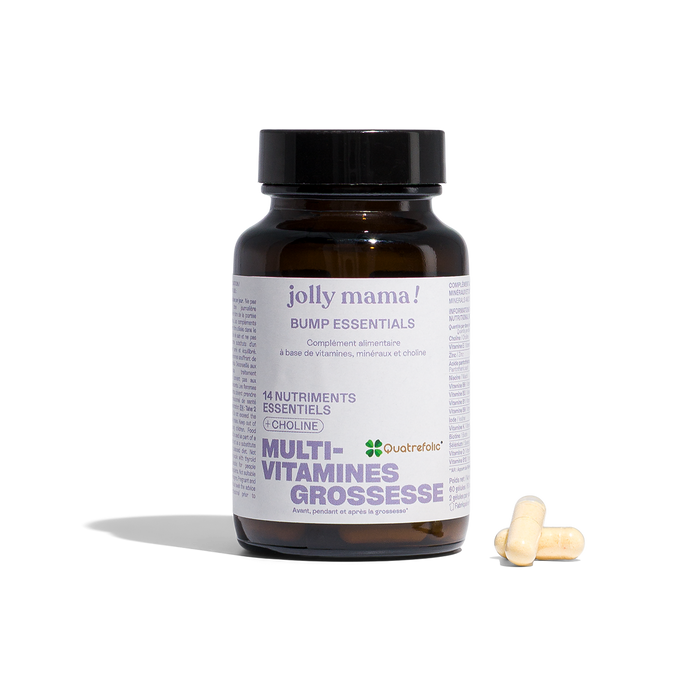
Multivitamines vegan grossesse & fertilité

15 nutriments clés, dont choline et folates hautement biodisponibles

100 % vegan et sans DHA

Baby Project
Pregnancy

from

21,76€

32€

Add
Sunny Mummy Sunny Mummy 10 mL – complément de vitamine D3 hautement assimilable + K2 pour prévenir carences fréquentes chez femmes enceintes et allaitantes
-15%
Add

Sunny Mummy

Vitamin D3 and K2 supplement for mothers

Active ingredients in their most bioavailable forms (D3 and K2 MK7)

3-month course

Pregnancy
Breastfeeding

from

15,30€

20€

Add
Omega Mama Omega Mama Jolly Mama – capsules DHA/EPA pures, parfaites pour post-partum
-20%
Best seller
Add

Omega Mama

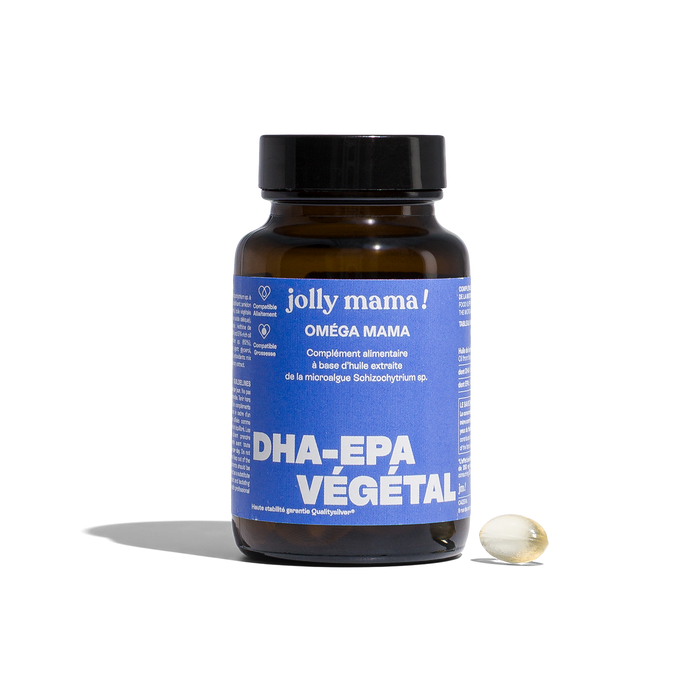
Plant-based DHA and EPA supplement

250 mg of DHA per capsule

Exceptional stability: Totox index of 4, thanks to Qualitysilver® technology

For everyone

from

17,60€

23€

Add
Choline Mama pot complément choline avec 2 gélules et 1 verre d'eau
-20%
Best seller
Add

Choline Mama

Choline supplement for pregnancy

Patented choline bitartrate Vitacholine®

The best-absorbed form

Breastfeeding
Pregnancy

from

16,83€

22€

Add
Baby Bump Gélules complément alimentaire
-15%
Best seller

Baby Bump

Multivitamines DHA grossesse & fertilité

14 nutriments essentiels + DHA + Choline

Formule 3-en-1 ultra complète avec capsule duocaps ™

Baby Project
Pregnancy

from

37,15€

46€

Add
Iron Mama femme enceinte tenant un verre d'eau et une gelule fer dans les mains
-20%
Best seller

Iron Mama

Iron bisglycinate-rich supplement

Highly bioavailable iron bisglycinate

Ferrochel™ without the side effects of iron supplements

For everyone

from

15,30€

20€

Add
See the 7 recommended products

Recommended products

PAGE PRODUIT 15 fond 1
JD 202606 VIGNETTE ABO 15

JOLLY DAYS: Up to -50%

Bénéficiez de -15% supplémentaire sur votre premier mois en vous abonnant
Baby Bump
Best seller
Promo -5%

Baby Bump

Multivitamines DHA grossesse & fertilité

Baby Project
Pregnancy

from

43,70€

46€

Iron Mama
Best seller
Promo -10%

Iron Mama

Iron bisglycinate-rich supplement

For everyone

from

18€

20€

Mama-gnésium
Best seller
Promo -10%

Mama-gnésium

Magnesium bisglycinate supplement

For everyone

from

22,50€

25€

Bump essentials
Promo -20%

Bump essentials

Multivitamines vegan grossesse & fertilité

Baby Project
Pregnancy

from

25,60€

32€

Sunny Mummy
Promo -10%

Sunny Mummy

Vitamin D3 and K2 supplement for mothers

Pregnancy
Breastfeeding

from

18€

20€

Omega Mama
Best seller
Promo -10%

Omega Mama

Plant-based DHA and EPA supplement

For everyone

from

20,70€

23€

Choline Mama
Best seller
Promo -10%

Choline Mama

Choline supplement for pregnancy

Breastfeeding
Pregnancy

from

19,80€

22€

added to cart
Continue shopping