- Jolly Mama
- Our ingredients
-
Vitamin B2 riboflavin
Vitamin B2: riboflavin, energy and radiance in the service of your maternity
Vitamin B2 contributes to the reduction of tiredness, a welcome support during pregnancy and the first months with your baby.
It contributes to normal iron metabolism, to support the increased requirements for this essential mineral during pregnancy.
Riboflavin contributes to the maintenance of normal skin and mucous membranes, to help preserve your radiance even when sleep is in short supply.
Origin and description
Vitamin B2, or riboflavin, is a water-soluble vitamin recognisable by its characteristic yellow colour.
It is involved in many cellular metabolic reactions, including energy production and protection against oxidative stress. The body stores it only in limited quantities, which makes a daily intake important.
During pregnancy, riboflavin contributes to iron metabolism and the reduction of fatigue, two key concerns during this period. In the postpartum period, it supports the renewal of skin and mucous membranes. The quality and bioavailability of the form used determines the actual effectiveness of the intake.
Vitamin B2 in the diet
Vitamin B2 is found naturally in dairy products such as milk, yoghurt and cheese, as well as in eggs, liver, almonds, mushrooms, spinach and wholegrain cereals. Nutritional yeast is also a valuable source. The absorption of riboflavin is supported by the presence of other nutrients in a meal, but it is sensitive to light: milk exposed to sunlight quickly loses part of its B2 content. People who consume few dairy or animal products, such as vegans, may have lower intakes. Restrictive diets or periods of nausea can also limit adequate intake.
Vitamin B2 as a supplement
As a food supplement, vitamin B2 is available in the form of free riboflavin or riboflavin-5'-phosphate, an already activated form that may be better absorbed. It is included in B-vitamin complexes and prenatal multivitamins such as those from pregnancy food supplements Jolly Mama. Additional supplementation may be relevant for pregnant women whose diet is limited or who consume few dairy products. Riboflavin is well tolerated and any excess is eliminated through the urine, giving it a characteristic yellow colour, which is entirely normal. Plant-based formulas are suitable for diets free from animal products.
Products containing it
-
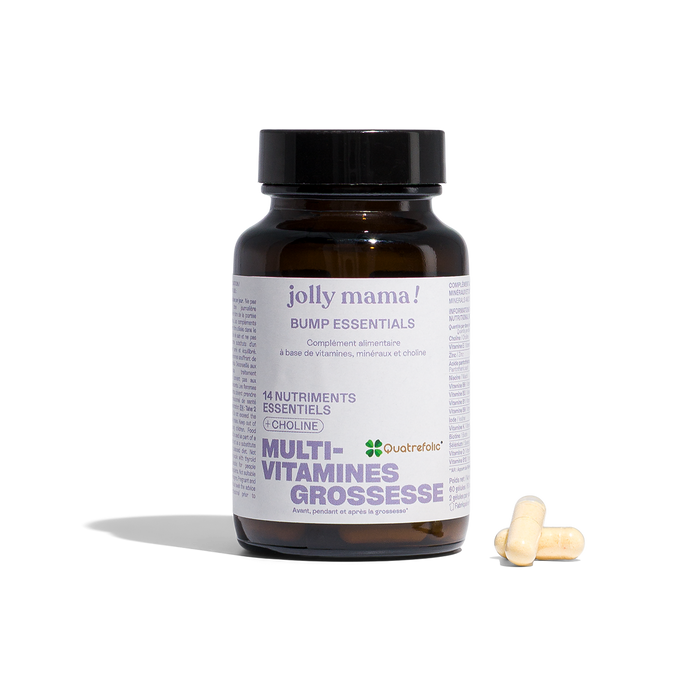
Bump essentials
Multivitamines vegan grossesse & fertilité
15 nutriments clés, dont choline et folates hautement biodisponibles
100 % vegan et sans DHA
Baby ProjectPregnancyfrom
21,76€32€
AddPurchase options
-
Bump powder
Multivitamin powder for conception & pregnancy
15 nutriments clés, dont choline et folates hautement biodisponibles
100 % vegan et en poudre, idéale en cas de nausées
Baby ProjectPregnancyfrom
23,80€35€
AddPurchase options
-
Post Essentials
Post-partum multivitamin supplement
17 nutrients in their best forms
Covers post-birth nutritional needs and reduces fatigue
BreastfeedingPost-partumfrom
26,65€33€
AddPurchase options
Why is vitamin B2 your ally throughout motherhood?
-
Energy and reduction of fatigue
Vitamin B2, or riboflavin, contributes to normal energy metabolism and helps reduce fatigue — a welcome support when nights are short and days are intense.
-
Iron metabolism during pregnancy
During pregnancy, riboflavin plays a role in normal iron metabolism, a mineral whose requirements increase significantly for both mother and baby.
-
Skin and mucous membranes in the post-partum period
Vitamin B2 contributes to the maintenance of normal skin and mucous membranes, to support skin recovery after childbirth and preserve your natural radiance.
How does it work? (The science bit)
When you consume vitamin B2, it is absorbed in the small intestine and converted into its active forms, FMN and FAD, which are essential cofactors for a very large number of cellular reactions. These cofactors are involved in the cellular energy production chain, where they enable carbohydrates, fats and proteins to be converted into usable energy. Riboflavin also plays a role in the functioning of glutathione reductase, an enzyme that helps protect cells against oxidative stress. Its role in iron metabolism facilitates the mobilisation and utilisation of this mineral by the body.
During pregnancy, cellular energy production is heavily called upon to meet the needs of both mother and baby. Vitamin B2 helps to maintain this active metabolism whilst supporting iron metabolism, the requirements for which are increased. In the postpartum period, it continues to contribute to the reduction of fatigue and the maintenance of skin and mucous membrane integrity, two important aspects of recovery. If you are affected by fatigue, do not hesitate to discover our energy products. Combined with other B vitamins, riboflavin contributes to overall metabolic support.
Your questions, our answers.
Vitamin B2 contributes to reducing tiredness by helping your body produce energy from food. This is an ongoing support, not an immediate effect. If your tiredness is linked to a riboflavin deficiency, regular supplementation may contribute to gradually restoring a better level of energy and vitality.
During pregnancy, riboflavin supports iron metabolism, the demand for which increases significantly. It also contributes to the increased energy metabolism of this period and to cell protection. It is found in Jolly Mama prenatal supplements to support mothers throughout pregnancy.
Riboflavin is very well tolerated. As it is water-soluble, any excess is naturally eliminated through the urine, which may turn a bright yellow colour. This is completely normal and harmless. At the doses found in food supplements, side effects are extremely rare.
Vitamin B2 has an excellent safety profile. No upper safety limit has been set by European health authorities. If you are taking several supplements containing B vitamins, simply check the dosages to avoid duplication. Seek advice from a healthcare professional if you are undergoing medical treatment.
Vitamin B2 contributes to the maintenance of normal skin and mucous membranes. It plays a role in cell renewal and protection against oxidative stress, two important mechanisms for skin quality. In the postpartum period, an adequate intake of riboflavin may support skin recovery alongside an adequate iron intake.
Our other ingredients
View all our ingredients
Vitamin B1 thiamine
Vitamin B3 nicotinamide niacin